-
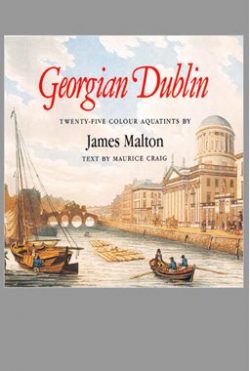 Twenty-five Views in Colour Aquatint ISBN: 978-0-85105-425-4 10.7 x 14.8 cm landscape xi, [53] pp. 25 full colour prints Georgian Dublin is a pocket-sized edition of Malton's superb colour aquatints which show Dublin city in its finest age – the period in which the present layout of the city emerged and during which many of its classical buildings were erected. These lively and colourful prints open a window to the past and reveal scene after scene which, with one exception, can still be visited today. The views range from the great courtyard of Dublin Castle, past Gandon's riverfront masterpieces, the Custom House and the Four Courts, to the simple street scene at Capel Street bridge, peopled with the Dubliners of two centuries ago.
-
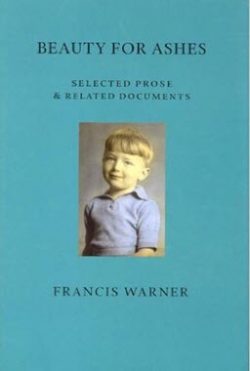 Selected Prose & Related Documents 336 pp. 23.4 x 13.5 cm illus. in colour and monochrome Poet of the Second World War and peacetime dramatist, Francis Warner was 75 this year (2012). This, the first selection from his prose, gives readers of his work some indication of the historical and intellectual background from which his poetry has sprung: of 'the giant race before the flood' who lived on to help shape Britain's post-war imagination. Starting with memories of the Blitz and his poem 'Blitz Requiem', Warner recalls his schooldays at Christ's Hospital, Horsham, recovering from six years of war, and the role played by music. He writes of his friends: 'Henry Chadwick: Musician', Kathleen Raine as fellow poet, C. S. Lewis and the Psalms, Henry Moore, Francis Bacon, Edmond Blunden, and Samuel Beckett, reproducing the manuscripts off two short plays Beckett discussed with and gave to him. Other subjects include W. B. Yeats, Benjamin Britten and the Japanese Noh plays, Samuel Palmer as poet, and Hugh Wybrew's Liturgical Texts of the Orthodox Church.
-
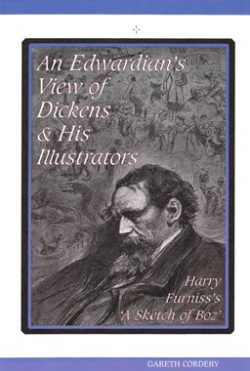 25.5 x 17.8 cm. xii, 116 pp. 2005 with 69 illus. Harry Furniss (1854–1925) was a well-known if somewhat abrasive figure in English literary, artistic and political circles during the half century either side of 1900. In March 1905, at the invitation of the Dickens Fellowship, he delivered in London’s Memorial Hall a platform lecture on Dickens and his illustrators, “A Sketch of Boz,” illuminated by some sixty magic lantern slides. Over the next two years Furniss toured the provinces with an enlarged version of this lecture. An Edwardian’s View of Dickens and His Illustrators is an edited and annotated transcription of the unpublished manuscript of this engaging lecture, together with the original illustrations, some of which are Furniss’s own.
-
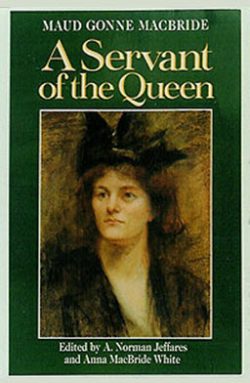 Edited by A. Norman Jeffares and Anna MacBride White 21.6 x 13.8 cm. paperback Maud Gonne MaeBride is part of Irish history: her foundation of the women's group Inghinidhe na hEireann. the Daughters of Ireland, in 1900, was the key that effectively opened the door of politics in the twentieth century to Irishwomen. Still remembered in Ireland for the fiery, emotive public speeches she made on behalf of the suffering – those evicted from their homes in the West of Ireland, the Treason-Felony prisoners on the Isle of Wight, indeed all those whom she saw as victims of the imperialism she constantly opposed – she is known, too, within and outside Ireland as the woman W. B. Yeats loved and celebrated in his poems
-
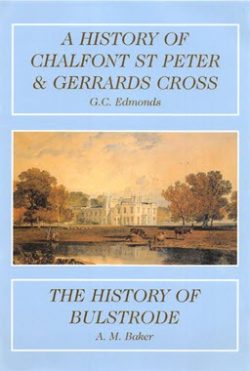 ISBN: 978-0-86140-319-6 23.4 x 15.5 cm. 189 pp. incl. over 100 illus. This book contains Revd Geoffrey Edmonds’ work, last published by this company in 1968, and Dr Audrey Baker’s hitherto unpublished history of Bulstrode, past home of Judge Jeffreys, the Dukes of Portland and then the Dukes of Somerset. While Chalfont St Peter dates back to before the Norman Conquest, and Bulstrode to the time of the Knights Templar, the parish of Gerrards Cross is a newly formed entity, being carved out of five neighbouring parishes, and greatly expanded following the 1906 opening of the London to High Wycombe Great Western & Great Central Joint Railway line which passed through the village. Through their separate histories both Dr Baker and the Revd Edmonds chart the history of the locality through the centuries, showing how it has evolved from Anglo-Saxon and medieval times, through the Reformation, the Cromwellian period and Restoration, the Hanoverian and Victorian eras to the 20th century, and how the great families who came to live here gained or lost power, rose, fell or moved on, as well as the creation of Gerrards Cross over the past century.
