-
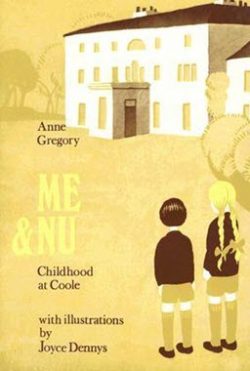 Illustrated by Joyce Dennys. With a prefatory note by Maurice Collis ISBN: 978-0-86140-010-2 19.0 x 13.5 cm. 128 pp. 1978 (reduced facsimile of first 1970 hardcover edition) Lady Gregory was the cornerstone of the Irish Literary Revival in the first quarter of the century. At Coole Park in Co. Galway she was host to many literary figures and painters of the time: W. B. Yeats of course, J. M. Synge, Bernard Shaw, Douglas Hyde, A. E. (George W. Russell), Sean O'Casey, John Masefield, George Moore, and among the painters, J. B. Yeats the elder, Jack B. Yeats and Augustus John. As well as spending a large part of her time as hostess of Coole, being a prolific author and playwright, a Director of the Abbey Theatre, the chief campaigner for the return of the Lane Pictures to Dublin, and an excellent landlord, she is remembered as a great personality.
-
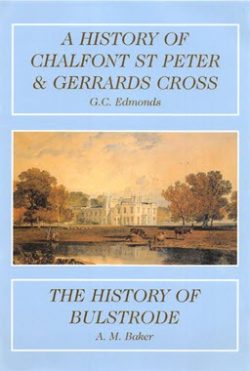 ISBN: 978-0-86140-319-6 23.4 x 15.5 cm. 189 pp. incl. over 100 illus. This book contains Revd Geoffrey Edmonds’ work, last published by this company in 1968, and Dr Audrey Baker’s hitherto unpublished history of Bulstrode, past home of Judge Jeffreys, the Dukes of Portland and then the Dukes of Somerset. While Chalfont St Peter dates back to before the Norman Conquest, and Bulstrode to the time of the Knights Templar, the parish of Gerrards Cross is a newly formed entity, being carved out of five neighbouring parishes, and greatly expanded following the 1906 opening of the London to High Wycombe Great Western & Great Central Joint Railway line which passed through the village. Through their separate histories both Dr Baker and the Revd Edmonds chart the history of the locality through the centuries, showing how it has evolved from Anglo-Saxon and medieval times, through the Reformation, the Cromwellian period and Restoration, the Hanoverian and Victorian eras to the 20th century, and how the great families who came to live here gained or lost power, rose, fell or moved on, as well as the creation of Gerrards Cross over the past century.
-
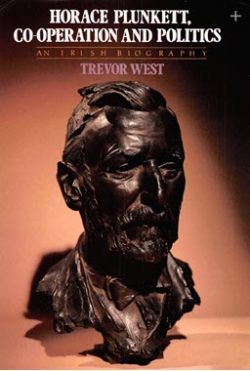 Horace Plunkett is remembered for his efforts to transform Irish agricultural practice, through the Co-operative Movement which he founded in 1889, and its administration via the Department of Agriculture, which he established ten years later. From a protestant ascendancy background, Plunkett was one of those ‘fenian unionists' who were always able to see both sides of the Irish Question, and whose reforming zeal, and frank expression of opinion, during the period in which Ireland moved from benevolent Tory rule by Westminster, to independence for the south and partition of the island, brought him into conflict with all shades of political opinion.
-
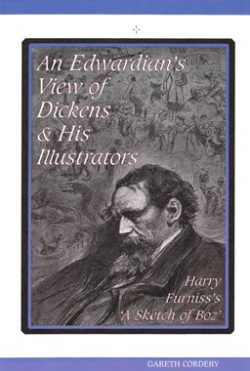 25.5 x 17.8 cm. xii, 116 pp. 2005 with 69 illus. Harry Furniss (1854–1925) was a well-known if somewhat abrasive figure in English literary, artistic and political circles during the half century either side of 1900. In March 1905, at the invitation of the Dickens Fellowship, he delivered in London’s Memorial Hall a platform lecture on Dickens and his illustrators, “A Sketch of Boz,” illuminated by some sixty magic lantern slides. Over the next two years Furniss toured the provinces with an enlarged version of this lecture. An Edwardian’s View of Dickens and His Illustrators is an edited and annotated transcription of the unpublished manuscript of this engaging lecture, together with the original illustrations, some of which are Furniss’s own.
-
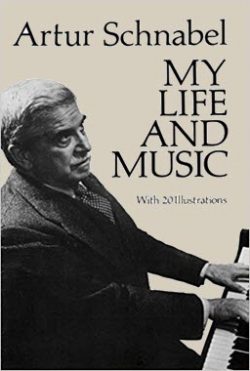 Widely regarded as one of the 20th century’s finest pianists, Artur Schnabel (1882-1951) was especially renowned as an interpreter of Beethoven. In the words of his friend Edward Crankshaw, his performance of the Diabelli Variations in his last years was ‘like looking at the sun without dark glasses’. However, Schnabel also earned high praise for his playing of Schubert, Mozart, and Brahms. Indeed, his later concert repertoire was largely devoted to great composers in the Austro-German tradition. In explanation, Schnabel contended that he wished to play only ‘music that was better than it could be performed’. His uncompromising, passionate commitment to penetrating the mysteries of the greatest music is clearly revealed in this absorbing, highly readable combination of personal reminiscence and musical manifesto. Not a conventional autobiography, it includes a transcript of 12 autobiographical lectures Schnabel gave to music students at the University of Chicago in 1945. The lectures were followed by informal sessions in which the pianist answered questions from the audience on a wide variety of musical topics. These questions and Schnabel’s revealing, unrehearsed replies comprise the second part of this book, offering rich insight into the pianist’s personality and musical philosophy. The final section, ‘Reflections on Music’, is a talk Schnabel gave on the occasion of receiving an honorary degree from the University of Manchester.
