-
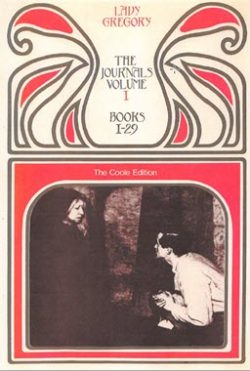 General Editors of the Coole Edition: T.R.Henn CBE and Colin Smythe Edited and with a Foreword by Daniel J. Murphy ISBN: 978-0-900675-91-1 21.4. x 13.8 cm. . frontis, t.e.g. Lennox Robinson's selection from Lady Gregory's Journals was first published in 1946 as the culmination of many years' negotiations between the Trustees of Lady Gregory's Estate and her London publishers, Putnam & Co., but it was only a fraction of the material that Lady Gregory had expected would be published when she sent the typescripts over to London in 1931.
-
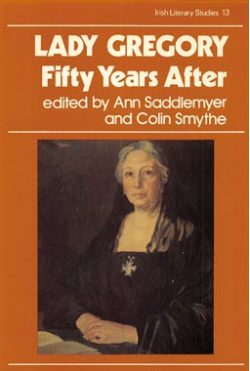 It is now over fifty years since the death of Augusta Gregory, who as a playwright, folklorist, essayist, poet, translator, editor, theatre administrator and nationalist, contributed so much and so uniquely to the realisation of modern Ireland. Yet soon after her death she seemed to be virtually forgotten, and the words on her gravestone – ‘she shall be remembered for ever’ – had a very hollow ring about them. It has only been in the last twenty-five years that Lady Gregory’s reputation has turned round, beginning with Elizabeth Coxhead’s biography, and the subsequent appearance of the Coole Edition of her works. The publication of Mary Lou Kohfeldt's biography in 1985 and now the appearance of this volume – the first collection of essays to be devoted to her – must surely create a greater awareness of her importance as a cornerstone of the Irish Literary Revival.
-
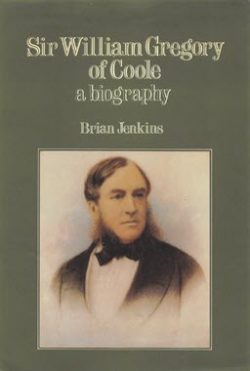 23.6 x 15.6 cm. William H. Gregory, to the extent that his name is familiar, is remembered merely as the husband of Lady Gregory, of Abbey Theatre and Irish Literary Revival fame. He contributed to this undeserved obscurity by failing to make the most of his undoubted abilities and by choosing as a bride a woman many years his junior who was to make the most of hers. Yet in his lifetime he was a figure of sufficient prominence – politician, racing man, dilettante – to be included in the Vanity Fair series of portraits even before he went on to serve with great success as a colonial governor. Moreover, his career throws additional light on the problems of Irish landowners and MPs at a time when Ireland was again a central issue in British politics.
-
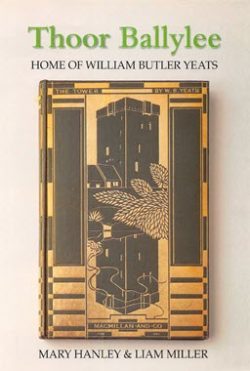 24.5 x 17.5 cm. 32 pp. with 16 illus. Third edition, with extra illus. 1995 (First published by Dolmen Press in 1965, 2nd edition 1977) In 1917 the Norman Tower at Ballylee in the West of Ireland was adopted by W.B. Yeats as his home. But the tower was much more than his residence. It became his monument and symbol. Here he conceived and wrote some of his greatest poetry, and in his inscription to commemorate its restoration he predicted the ruinous state into which the building lapsed after his death. The restoration of the Tower in the 1960s was inspired mainly by the enthusiasm of the Kiltartan Society and Mary Hanley. Liam Miller edited and extended Mrs Hanley’s text to set Yeats’s occupancy in a historical context. The illustrations include plans of the Tower, a map of the locality, photographs taken in the years when Yeats lived there, and some sketches by Lady Gregory. The front cover illustration is of T. Sturge Moore’s design for the front cover and jacket of the first edition of The Tower (1928) as it appeared when blocked on the book.
-
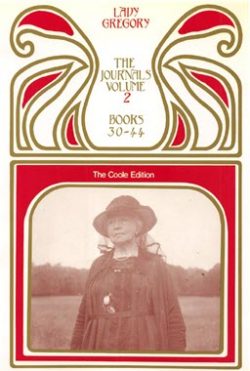 General Editors of the Coole Edition: T.R.Henn CBE and Colin Smythe Edited by Daniel J. Murphy, with an Afterword by Colin Smythe ISBN: 978-0-900675-92-8 21.4 x 13.8 cm. frontis. t.e.g. Lennox Robinson's selection from Lady Gregory's Journals was published in 1946. It only contained a small fraction of the total material that she typed out (editing as she did so) from her manuscript diaries. In 1964 the bulk of Lady Gregory's archives were bought by the Berg Collection of the New York Public Library, and the typescripts of her diaries, which formed part of the archive, were prepared for publication by the present editor, Daniel Murphy. The first volume of this edition, containing Books 1 to 29, was published in 1978. This second volume, containing Books 30 to 44, not only completes the typed version of her diaries (which ended in November 1930), but also adds the unedited text of the manuscript diary she kept from then until a fortnight before her death.
