-
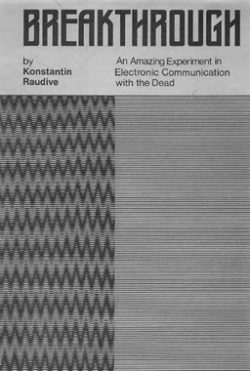 In 2021, the 50th anniversary of the first publication of Breakthrough, "What happens after physical death?" is still the big question concerning the nature of existence. In his groundbreaking work, psychologist Konstantin Raudive experimented using a communication method known as Electronic Voice Phenomena (EVP), whereby deceased communicators appear to send messages and images via computers, radios, televisions and other electronic devices. In 1959 Swedish artist and filmmaker Friedrich Jurgenson was making a tape recording and during playback he discovered what sounded like a human voice on the tape. He put it down to faulty equipment but when he searched other tapes, he found more voices, which seemed to be messages from his dead mother. Jurgenson recounted the experience in a book titled Voices from Space. The book impressed Raudive and subsequently he and Jurgenson collaborated for a time and encountered more voices. Later, Raudive undertook his own research amassing a collection of thousands of voice recordings and in 1968 his work was published in German under the title, Unhörbares Wird Hörbar (The Inaudible Becomes Audible). In 1969 after being approached at the Frankfurt Book Fair, British publisher Colin Smythe asked his colleague Peter Bander to assess Raudive's book with a view to publishing it in English, and, unbeknown to Bander, did his own experiments with positive results. Since that time Jurgenson and Raudive's experiments have been replicated thousands of times by researchers and enthusiasts all over the world and Breakthrough remains a classic in the genre. The communicators overriding message? "We are not dead!"
 -
 21.6 x 13.8 pp. 170 pp. 1992 pbk repr. of 1980 edition Holy wells have been a feature of the religion of the Irish people for longer than records have existed, and while pilgrimages to them are not as common as in the last centuries, many wells are still visited, particularly on the Saints’ or ‘Pattern’ Days, and even now new wells occasionally appear. In this survey Dr Patrick Logan, author of The Old Gods, Irish Country Cures and Fair Day: The Story of Irish Fairs and Markets, describes many of those wells that are still visited, detailing the features of the pilgrimage and the benefits obtained, together with the legends attached to the wells, the saints they are dedicated to and their Pattern Days, the sites, trees and stones associated with them, and fish that some of them have; he also gives information about the holy islands that have wells.
 -
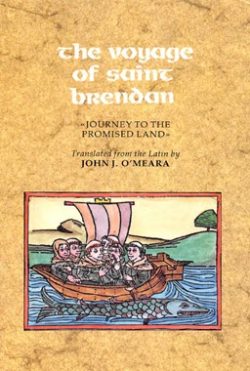 Written in about AD800, Navigato Sancti Brendani Abbatis is one of the most famous and enduring stories of western Christendom. While the question whether Saint Brendan reached America remains a subject of controversy, the tale itself is of great interest – a strongly integrated text which derives from several centuries of Irish literary tradition. The text is illustrated by the relevant woodcuts from a German version of the tale which was printed in Augsburg in 1476. John J. O’Meara has here translated one of the most famous and enduring stories of western Christendom, the Navigatio Sancti Brendani Abbatis, written in Ireland perhaps as early as the year 800. While the routes of Saint Brendan’s journeys remain a subject of controversy, the tale itself is of great interest – a strongly integrated text which derives from several centuries of Irish literary tradition.
