-
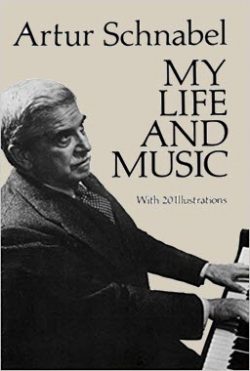 Widely regarded as one of the 20th century’s finest pianists, Artur Schnabel (1882-1951) was especially renowned as an interpreter of Beethoven. In the words of his friend Edward Crankshaw, his performance of the Diabelli Variations in his last years was ‘like looking at the sun without dark glasses’. However, Schnabel also earned high praise for his playing of Schubert, Mozart, and Brahms. Indeed, his later concert repertoire was largely devoted to great composers in the Austro-German tradition. In explanation, Schnabel contended that he wished to play only ‘music that was better than it could be performed’. His uncompromising, passionate commitment to penetrating the mysteries of the greatest music is clearly revealed in this absorbing, highly readable combination of personal reminiscence and musical manifesto. Not a conventional autobiography, it includes a transcript of 12 autobiographical lectures Schnabel gave to music students at the University of Chicago in 1945. The lectures were followed by informal sessions in which the pianist answered questions from the audience on a wide variety of musical topics. These questions and Schnabel’s revealing, unrehearsed replies comprise the second part of this book, offering rich insight into the pianist’s personality and musical philosophy. The final section, ‘Reflections on Music’, is a talk Schnabel gave on the occasion of receiving an honorary degree from the University of Manchester.
 -
 General Editors of the Coole Edition: T. R. Henn CBE and Colin Smythe With a Foreword by T. R. Henn ISBN: 978-0-900675-35-5 Studies and Translations from the Irish, including nine plays by Douglas Hyde 22.7 x 13.8 cm. 286 pp. illus. 1974 Volume 11 of the Coole Edition of Lady Gregory's works In Poets and Dreamers Lady Gregory has gathered together a number of essays and translations she had made from the Irish of Douglas Hyde, An Craoibhin Aoibhinn, ‘the Sweet Little Branch’, who was founder and President of the Gaelic League at the time and later to be the first President of the Republic of Ireland.
 -
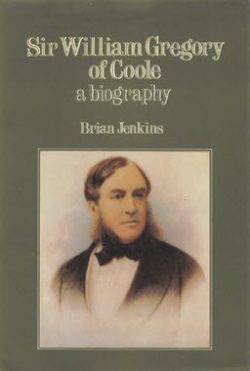 23.6 x 15.6 cm. William H. Gregory, to the extent that his name is familiar, is remembered merely as the husband of Lady Gregory, of Abbey Theatre and Irish Literary Revival fame. He contributed to this undeserved obscurity by failing to make the most of his undoubted abilities and by choosing as a bride a woman many years his junior who was to make the most of hers. Yet in his lifetime he was a figure of sufficient prominence – politician, racing man, dilettante – to be included in the Vanity Fair series of portraits even before he went on to serve with great success as a colonial governor. Moreover, his career throws additional light on the problems of Irish landowners and MPs at a time when Ireland was again a central issue in British politics.
 -
 Edited by Alan Price paperback 21.4 cm. J.M.Synge died in 1909 and The Works of John M. Synge were published in four volumes by Maunsel & Co., Dublin, in 1910. Since that time, with the exception of a few minor verses and one or two fragments of prose, the canon of his work has remained unaltered. Nevertheless, much unpublished material exists, for the most part of great interest and significance for the understanding of Synge's methods of work and development. This material, including early drafts of the plays, notebooks, poems, and fragments of poetic drama, has now been thoroughly explored in order to create this definitive edition, first published by Oxford University Press 1962-68, which not only collects together all that is of significance in his printed and in his unprinted work, but also, by a careful use of worksheets and early drafts, indicates much of the process of creation which occurred before the production of the printed page. The Collected Works is in four volumes, under the general editorship of the late Professor Robin Skelton, of the University of Victoria, British Columbia, who began the series with his edition of the poems and translations.
 -
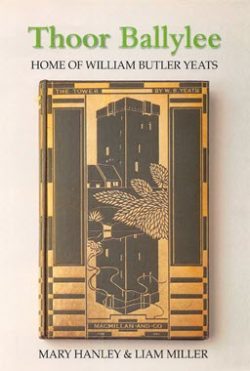 24.5 x 17.5 cm. 32 pp. with 16 illus. Third edition, with extra illus. 1995 (First published by Dolmen Press in 1965, 2nd edition 1977) In 1917 the Norman Tower at Ballylee in the West of Ireland was adopted by W.B. Yeats as his home. But the tower was much more than his residence. It became his monument and symbol. Here he conceived and wrote some of his greatest poetry, and in his inscription to commemorate its restoration he predicted the ruinous state into which the building lapsed after his death. The restoration of the Tower in the 1960s was inspired mainly by the enthusiasm of the Kiltartan Society and Mary Hanley. Liam Miller edited and extended Mrs Hanley’s text to set Yeats’s occupancy in a historical context. The illustrations include plans of the Tower, a map of the locality, photographs taken in the years when Yeats lived there, and some sketches by Lady Gregory. The front cover illustration is of T. Sturge Moore’s design for the front cover and jacket of the first edition of The Tower (1928) as it appeared when blocked on the book.
