-
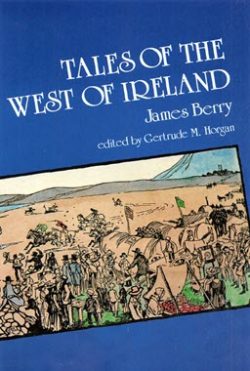 Edited by Gertrude M. Horgan 21.6 x 13.8 cm. Published first by Dolmen Press in 1966 During a period spent in the west of Ireland in 1964-65, Gertrude Horgan discovered the tales which James Berry had contributed to a local paper, The Mayo News, during the last years of his life, and decided to edit the present collection, first published by the Dolmen Press in 1966. In doing this she added an important body of work to 19th century Irish literature and rescued the author from oblivion. Like William Carleton, James Berry, a native of County Mayo, came from peasant stock. He spent his whole life in the West until his death at the age of seventy-two in 1914. The material of his tales comes from the people of Mayo and Galway, and introduces the smugglers, the packmen and the raparees of the West. Mainly handed down to him by word of mouth, they tell of poor communities living in a bleak and beautiful countryside against a background of secret societies, man-hunts, smuggling, murders, wakes, rebellion and starvation. Some go back hundreds of years, evoking the legendary past of Connemara, while others are Berry’s own tales of the Ireland of his youth when the shadow of the Famine hovered over the West.
 -
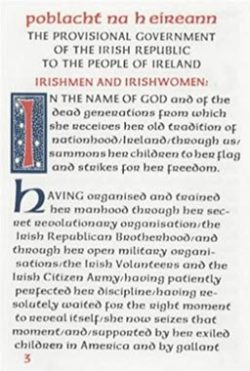 ISBN: 978-0-85105-289-2 18.4 x 13.0 cm 10 pp. set in Uncial type, with reproduction of the original Proclamation, the pivotal document of the Easter Rising
 -
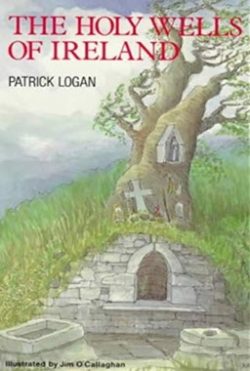 21.6 x 13.8 pp. 170 pp. 1992 pbk repr. of 1980 edition Holy wells have been a feature of the religion of the Irish people for longer than records have existed, and while pilgrimages to them are not as common as in the last centuries, many wells are still visited, particularly on the Saints’ or ‘Pattern’ Days, and even now new wells occasionally appear. In this survey Dr Patrick Logan, author of The Old Gods, Irish Country Cures and Fair Day: The Story of Irish Fairs and Markets, describes many of those wells that are still visited, detailing the features of the pilgrimage and the benefits obtained, together with the legends attached to the wells, the saints they are dedicated to and their Pattern Days, the sites, trees and stones associated with them, and fish that some of them have; he also gives information about the holy islands that have wells.
 -
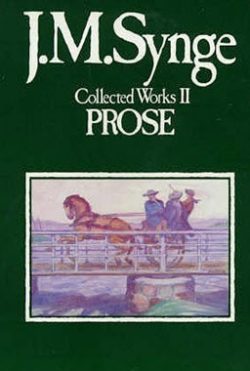 Edited by Alan Price paperback 21.4 cm. J.M.Synge died in 1909 and The Works of John M. Synge were published in four volumes by Maunsel & Co., Dublin, in 1910. Since that time, with the exception of a few minor verses and one or two fragments of prose, the canon of his work has remained unaltered. Nevertheless, much unpublished material exists, for the most part of great interest and significance for the understanding of Synge's methods of work and development. This material, including early drafts of the plays, notebooks, poems, and fragments of poetic drama, has now been thoroughly explored in order to create this definitive edition, first published by Oxford University Press 1962-68, which not only collects together all that is of significance in his printed and in his unprinted work, but also, by a careful use of worksheets and early drafts, indicates much of the process of creation which occurred before the production of the printed page. The Collected Works is in four volumes, under the general editorship of the late Professor Robin Skelton, of the University of Victoria, British Columbia, who began the series with his edition of the poems and translations.
 -
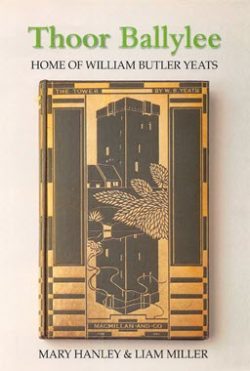 24.5 x 17.5 cm. 32 pp. with 16 illus. Third edition, with extra illus. 1995 (First published by Dolmen Press in 1965, 2nd edition 1977) In 1917 the Norman Tower at Ballylee in the West of Ireland was adopted by W.B. Yeats as his home. But the tower was much more than his residence. It became his monument and symbol. Here he conceived and wrote some of his greatest poetry, and in his inscription to commemorate its restoration he predicted the ruinous state into which the building lapsed after his death. The restoration of the Tower in the 1960s was inspired mainly by the enthusiasm of the Kiltartan Society and Mary Hanley. Liam Miller edited and extended Mrs Hanley’s text to set Yeats’s occupancy in a historical context. The illustrations include plans of the Tower, a map of the locality, photographs taken in the years when Yeats lived there, and some sketches by Lady Gregory. The front cover illustration is of T. Sturge Moore’s design for the front cover and jacket of the first edition of The Tower (1928) as it appeared when blocked on the book.
