-
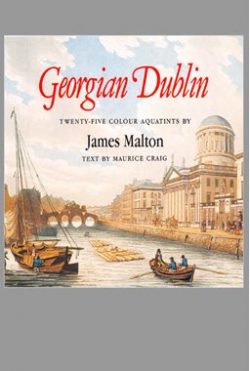 Twenty-five Views in Colour Aquatint ISBN: 978-0-85105-425-4 10.7 x 14.8 cm landscape xi, [53] pp. 25 full colour prints Georgian Dublin is a pocket-sized edition of Malton's superb colour aquatints which show Dublin city in its finest age – the period in which the present layout of the city emerged and during which many of its classical buildings were erected. These lively and colourful prints open a window to the past and reveal scene after scene which, with one exception, can still be visited today. The views range from the great courtyard of Dublin Castle, past Gandon's riverfront masterpieces, the Custom House and the Four Courts, to the simple street scene at Capel Street bridge, peopled with the Dubliners of two centuries ago.
 -
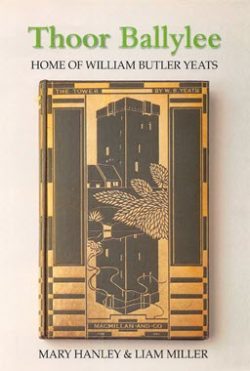 24.5 x 17.5 cm. 32 pp. with 16 illus. Third edition, with extra illus. 1995 (First published by Dolmen Press in 1965, 2nd edition 1977) In 1917 the Norman Tower at Ballylee in the West of Ireland was adopted by W.B. Yeats as his home. But the tower was much more than his residence. It became his monument and symbol. Here he conceived and wrote some of his greatest poetry, and in his inscription to commemorate its restoration he predicted the ruinous state into which the building lapsed after his death. The restoration of the Tower in the 1960s was inspired mainly by the enthusiasm of the Kiltartan Society and Mary Hanley. Liam Miller edited and extended Mrs Hanley’s text to set Yeats’s occupancy in a historical context. The illustrations include plans of the Tower, a map of the locality, photographs taken in the years when Yeats lived there, and some sketches by Lady Gregory. The front cover illustration is of T. Sturge Moore’s design for the front cover and jacket of the first edition of The Tower (1928) as it appeared when blocked on the book.
 -
 Edited by Alan Price paperback 21.4 cm. J.M.Synge died in 1909 and The Works of John M. Synge were published in four volumes by Maunsel & Co., Dublin, in 1910. Since that time, with the exception of a few minor verses and one or two fragments of prose, the canon of his work has remained unaltered. Nevertheless, much unpublished material exists, for the most part of great interest and significance for the understanding of Synge's methods of work and development. This material, including early drafts of the plays, notebooks, poems, and fragments of poetic drama, has now been thoroughly explored in order to create this definitive edition, first published by Oxford University Press 1962-68, which not only collects together all that is of significance in his printed and in his unprinted work, but also, by a careful use of worksheets and early drafts, indicates much of the process of creation which occurred before the production of the printed page. The Collected Works is in four volumes, under the general editorship of the late Professor Robin Skelton, of the University of Victoria, British Columbia, who began the series with his edition of the poems and translations.
 -
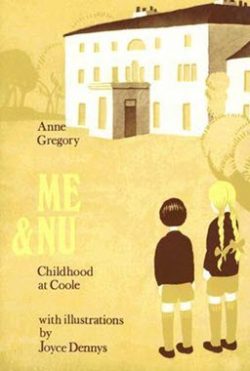 Illustrated by Joyce Dennys. With a prefatory note by Maurice Collis ISBN: 978-0-86140-010-2 19.0 x 13.5 cm. 128 pp. 1978 (reduced facsimile of first 1970 hardcover edition) Lady Gregory was the cornerstone of the Irish Literary Revival in the first quarter of the century. At Coole Park in Co. Galway she was host to many literary figures and painters of the time: W. B. Yeats of course, J. M. Synge, Bernard Shaw, Douglas Hyde, A. E. (George W. Russell), Sean O'Casey, John Masefield, George Moore, and among the painters, J. B. Yeats the elder, Jack B. Yeats and Augustus John. As well as spending a large part of her time as hostess of Coole, being a prolific author and playwright, a Director of the Abbey Theatre, the chief campaigner for the return of the Lane Pictures to Dublin, and an excellent landlord, she is remembered as a great personality.
 -
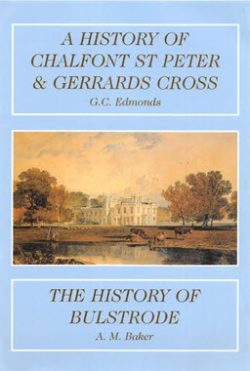 ISBN: 978-0-86140-319-6 23.4 x 15.5 cm. 189 pp. incl. over 100 illus. This book contains Revd Geoffrey Edmonds’ work, last published by this company in 1968, and Dr Audrey Baker’s hitherto unpublished history of Bulstrode, past home of Judge Jeffreys, the Dukes of Portland and then the Dukes of Somerset. While Chalfont St Peter dates back to before the Norman Conquest, and Bulstrode to the time of the Knights Templar, the parish of Gerrards Cross is a newly formed entity, being carved out of five neighbouring parishes, and greatly expanded following the 1906 opening of the London to High Wycombe Great Western & Great Central Joint Railway line which passed through the village. Through their separate histories both Dr Baker and the Revd Edmonds chart the history of the locality through the centuries, showing how it has evolved from Anglo-Saxon and medieval times, through the Reformation, the Cromwellian period and Restoration, the Hanoverian and Victorian eras to the 20th century, and how the great families who came to live here gained or lost power, rose, fell or moved on, as well as the creation of Gerrards Cross over the past century.
 -
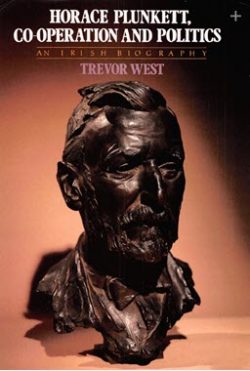 Horace Plunkett is remembered for his efforts to transform Irish agricultural practice, through the Co-operative Movement which he founded in 1889, and its administration via the Department of Agriculture, which he established ten years later. From a protestant ascendancy background, Plunkett was one of those ‘fenian unionists' who were always able to see both sides of the Irish Question, and whose reforming zeal, and frank expression of opinion, during the period in which Ireland moved from benevolent Tory rule by Westminster, to independence for the south and partition of the island, brought him into conflict with all shades of political opinion.
 -
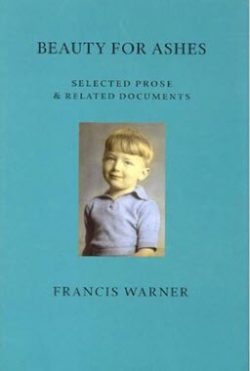 Selected Prose & Related Documents 336 pp. 23.4 x 13.5 cm illus. in colour and monochrome Poet of the Second World War and peacetime dramatist, Francis Warner was 75 this year (2012). This, the first selection from his prose, gives readers of his work some indication of the historical and intellectual background from which his poetry has sprung: of 'the giant race before the flood' who lived on to help shape Britain's post-war imagination. Starting with memories of the Blitz and his poem 'Blitz Requiem', Warner recalls his schooldays at Christ's Hospital, Horsham, recovering from six years of war, and the role played by music. He writes of his friends: 'Henry Chadwick: Musician', Kathleen Raine as fellow poet, C. S. Lewis and the Psalms, Henry Moore, Francis Bacon, Edmond Blunden, and Samuel Beckett, reproducing the manuscripts off two short plays Beckett discussed with and gave to him. Other subjects include W. B. Yeats, Benjamin Britten and the Japanese Noh plays, Samuel Palmer as poet, and Hugh Wybrew's Liturgical Texts of the Orthodox Church.
 -
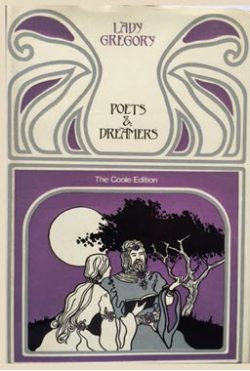 General Editors of the Coole Edition: T. R. Henn CBE and Colin Smythe With a Foreword by T. R. Henn ISBN: 978-0-900675-35-5 Studies and Translations from the Irish, including nine plays by Douglas Hyde 22.7 x 13.8 cm. 286 pp. illus. 1974 Volume 11 of the Coole Edition of Lady Gregory's works In Poets and Dreamers Lady Gregory has gathered together a number of essays and translations she had made from the Irish of Douglas Hyde, An Craoibhin Aoibhinn, ‘the Sweet Little Branch’, who was founder and President of the Gaelic League at the time and later to be the first President of the Republic of Ireland.
 -
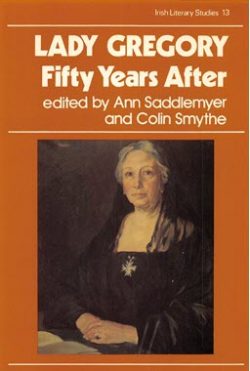 It is now over fifty years since the death of Augusta Gregory, who as a playwright, folklorist, essayist, poet, translator, editor, theatre administrator and nationalist, contributed so much and so uniquely to the realisation of modern Ireland. Yet soon after her death she seemed to be virtually forgotten, and the words on her gravestone – ‘she shall be remembered for ever’ – had a very hollow ring about them. It has only been in the last twenty-five years that Lady Gregory’s reputation has turned round, beginning with Elizabeth Coxhead’s biography, and the subsequent appearance of the Coole Edition of her works. The publication of Mary Lou Kohfeldt's biography in 1985 and now the appearance of this volume – the first collection of essays to be devoted to her – must surely create a greater awareness of her importance as a cornerstone of the Irish Literary Revival.
 -
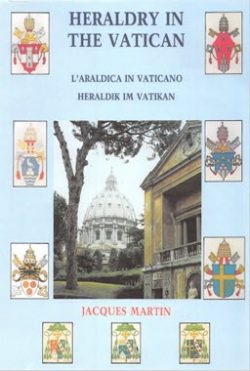 Edited and Introduced by Peter Bander van Duren A historical walk with the Prefect of the Pontifical Household through the treasures of papal heraldry ISBN: 978-0-905715-25-4 24.8 x 18.8 cm. 285 pp. + nearly 400 b/w illus. with the text and 24 pp. with 54 colour illus. Captions to all illustrations are in English, Italian and German In the late 1960s Cardinal Martin conceived the idea of having an authoritative heraldic guide for the Vatican where hundreds of coats of arms date back to Pope Eugene IV (1431-1447) the earliest armorial bearings of popes who resided in the Vatican. When Pope Paul VI had consecrated him Bishop of Neapolis in Palaestina during the papal visit to the Holy Land in 1964 and appointed him the first Prefect of the Pontifical Court, Monsignor Martin spent his free time writing profusely illustrated articles for the Holy See's Sunday newspaper L'Osservatore della Domenica on heraldry in the Vatican
 -
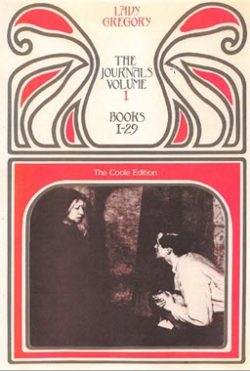 General Editors of the Coole Edition: T.R.Henn CBE and Colin Smythe Edited and with a Foreword by Daniel J. Murphy ISBN: 978-0-900675-91-1 21.4. x 13.8 cm. . frontis, t.e.g. Lennox Robinson's selection from Lady Gregory's Journals was first published in 1946 as the culmination of many years' negotiations between the Trustees of Lady Gregory's Estate and her London publishers, Putnam & Co., but it was only a fraction of the material that Lady Gregory had expected would be published when she sent the typescripts over to London in 1931.
 -
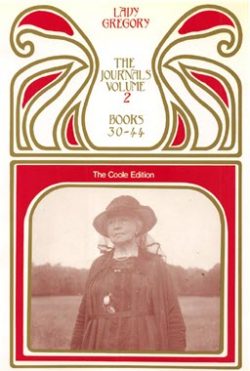 General Editors of the Coole Edition: T.R.Henn CBE and Colin Smythe Edited by Daniel J. Murphy, with an Afterword by Colin Smythe ISBN: 978-0-900675-92-8 21.4 x 13.8 cm. frontis. t.e.g. Lennox Robinson's selection from Lady Gregory's Journals was published in 1946. It only contained a small fraction of the total material that she typed out (editing as she did so) from her manuscript diaries. In 1964 the bulk of Lady Gregory's archives were bought by the Berg Collection of the New York Public Library, and the typescripts of her diaries, which formed part of the archive, were prepared for publication by the present editor, Daniel Murphy. The first volume of this edition, containing Books 1 to 29, was published in 1978. This second volume, containing Books 30 to 44, not only completes the typed version of her diaries (which ended in November 1930), but also adds the unedited text of the manuscript diary she kept from then until a fortnight before her death.
