
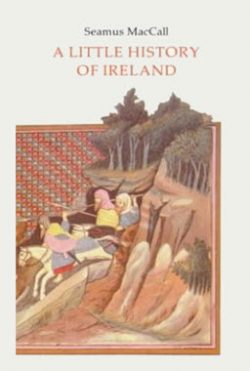
21.6 x 13.8 cm. 63 pp. 1991
ISBN: 978-0-85105-433-9
First published by Dolmen Press in 1973, 2nd enlarged Dolmen edition 1982.
Seamus MacCall wanted to show that, as a nation, the Irish have much to be proud of and this resolve fired him with a contagious enthusiasm which the reader of A Little History of Ireland cannot help but share. It is a bird's-eye view of the Irish past which is at once lucid and expert and presents a vivid and lively view of its subject. This new edition of A Little History of Ireland has a final section by Catherine MacCall and Börje Thilman which brings the story up to our time.
-
Out of stock
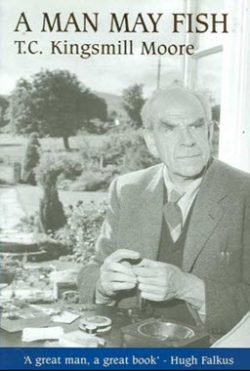
ISBN : 978-0-86140-451-3
With a foreword by Hugh Falkus and an introduction by Conrad Voss Bark23.3 x 15.6 cm xx, 225 pp. diagrams + colour frontis. and 16 pp. with 28 illus. enlarged edition 1979 [1st edition published 1960]
A Man May Fish by the late Mr Justice Kingsmill Moore (1893-1979), one of the most respected men in Ireland in the decades before his death, has become a fishing classic since its first publication in 1960. The work covers a lifetime of fishing in Ireland for trout, sea trout (white trout), and salmon. The author was a skilled and long-experienced anger with an enviable command of the English language, and his book is full of information on how to fish. Although it is often reminiscent, there are no idle memories; ever incident teaches something of value, so that A Man May Fish is a really, useful, practical book.
-
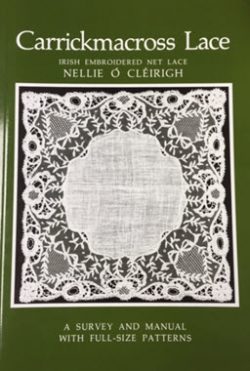 29.5 x 21.0 cm. 64 pp. with 84 illus, incl. 32 patterns 1985 (Dolmen Press) 1990 by Colin Smythe Ltd Carrickmacross lace was originally inspired by some Italian appliqué‚ lace which Mrs Grey Porter, wife of the Rector of Donaghmoyne, a small village northeast of Carrickmacross in County Monaghan, brought back from her continental honeymoon in 1816. Her interest in this lace led to an exploration of the craft with her sewing maid, and by the following decade she had evolved an individual style and established a cottage industry in her home parish, training young women as lacemakers. These in turn spread the craft to other areas in the northern counties of Ireland. In the 1840s a school of lacemakers was established to create gainful work for women after the Great Famine, but overproduction and economic depression led to a decline in the lace industry. The survival of Carrickmacross lace into the twentieth century is due to the nuns of the St Louis order who established a convent in the town and set up a lace-making class in 1897, which still continues the tradition.
 -
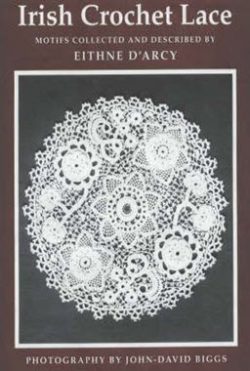 ISBN: 978-0-85105-514-5 29.7 x 21.2 cm. 64 pp. with 215 illus. [1985 Dolmen Press] revised edition 2003 Of all forms of crochet lace, that known as ‘Irish Crochet’ is most sought after and is probably the best known. While the Irish tradition for producing this work dates back to the sixteenth century, when it was known as ‘nuns work’ from the fact that the technique and style was developed in Irish convent communities in imitation of continental lacemaking styles, the manufacture of crochet lace did not become a cottage industry in Ireland until the middle of the nineteenth century, after the devastation caused by the Great Famine of the 1840s, when the development of home crafts was encouraged to create some small income for otherwise destitute families.
 -
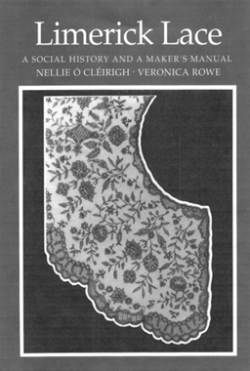 ISBN: 978-0-86140-368-4 29.6 x 21.0 cm. 91 pp. with 115 illus. Limerick is probably the most famous of all Irish laces. When President Kennedy came to Limerick in 1963 the Lord Mayor presented him with a Christening robe of the lace, and other important visitors have been delighted to receive gifts of this prestigious material. The making of this form of lace became possible when machine-made net became readily available, as it is a form of embroidery on net, being either chain-stitch (tambour) or darned net (also called run-lace), or a combination of both techniques. This volume is produced in the same format as Carrickmacross Lace and Mountmellick Work, and is in three sections. The first deals with the invention of Limerick lace and its history, the second with Mrs Florence Vere O'Brien and her contribution to Limerick and its lace-workers, while the third deals with the techniques used in making Limerick Lace, the materials and designs, preparation and sewing, and filling and embroidery stitches. The book contains many illustrations of fine piece of lacework from the authors' collections, as well as pictures of prizewinning examples from photos in the possession of the Royal Dublin Society.
 -
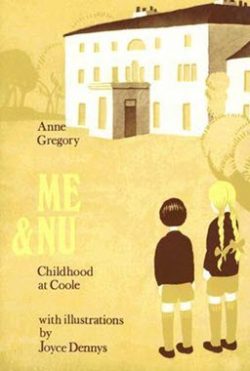 Illustrated by Joyce Dennys. With a prefatory note by Maurice Collis ISBN: 978-0-86140-010-2 19.0 x 13.5 cm. 128 pp. 1978 (reduced facsimile of first 1970 hardcover edition) Lady Gregory was the cornerstone of the Irish Literary Revival in the first quarter of the century. At Coole Park in Co. Galway she was host to many literary figures and painters of the time: W. B. Yeats of course, J. M. Synge, Bernard Shaw, Douglas Hyde, A. E. (George W. Russell), Sean O'Casey, John Masefield, George Moore, and among the painters, J. B. Yeats the elder, Jack B. Yeats and Augustus John. As well as spending a large part of her time as hostess of Coole, being a prolific author and playwright, a Director of the Abbey Theatre, the chief campaigner for the return of the Lane Pictures to Dublin, and an excellent landlord, she is remembered as a great personality.
 -
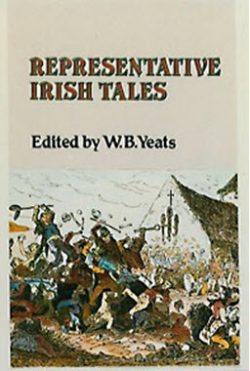 With a foreword by Mary Helen Thuente This anthology of Irish fiction edited by W.B. Yeats was first published in 1891, but despite its significance in his early career, was out of print for nearly eighty years. Representative Irish Tales is a fine selection of Irish fiction – as representative of Yeats himself as it is of Irish novelists. His introductory commentary and his editorial emendations provide an interesting perspective on an influential, but relatively unknown phase of his early work. Novelists represented are: Maria Edgeworth, John & Michael Banim, William Carleton, Samuel Lover, William Maginn, T. Crofton Croker, Gerald Griffin, Charles Lever, Charles Kickham, and Miss Rosa Mulholland.
 -
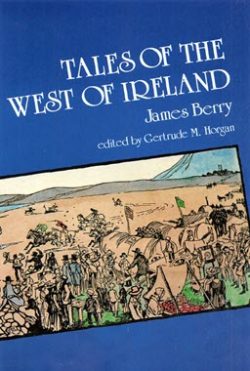 Edited by Gertrude M. Horgan 21.6 x 13.8 cm. Published first by Dolmen Press in 1966 During a period spent in the west of Ireland in 1964-65, Gertrude Horgan discovered the tales which James Berry had contributed to a local paper, The Mayo News, during the last years of his life, and decided to edit the present collection, first published by the Dolmen Press in 1966. In doing this she added an important body of work to 19th century Irish literature and rescued the author from oblivion. Like William Carleton, James Berry, a native of County Mayo, came from peasant stock. He spent his whole life in the West until his death at the age of seventy-two in 1914. The material of his tales comes from the people of Mayo and Galway, and introduces the smugglers, the packmen and the raparees of the West. Mainly handed down to him by word of mouth, they tell of poor communities living in a bleak and beautiful countryside against a background of secret societies, man-hunts, smuggling, murders, wakes, rebellion and starvation. Some go back hundreds of years, evoking the legendary past of Connemara, while others are Berry’s own tales of the Ireland of his youth when the shadow of the Famine hovered over the West.
 -
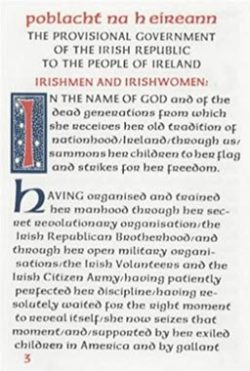 ISBN: 978-0-85105-289-2 18.4 x 13.0 cm 10 pp. set in Uncial type, with reproduction of the original Proclamation, the pivotal document of the Easter Rising
 -
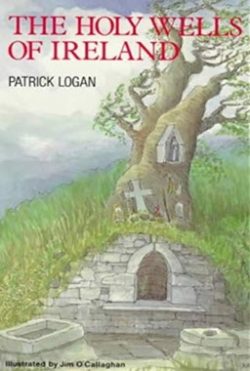 21.6 x 13.8 pp. 170 pp. 1992 pbk repr. of 1980 edition Holy wells have been a feature of the religion of the Irish people for longer than records have existed, and while pilgrimages to them are not as common as in the last centuries, many wells are still visited, particularly on the Saints’ or ‘Pattern’ Days, and even now new wells occasionally appear. In this survey Dr Patrick Logan, author of The Old Gods, Irish Country Cures and Fair Day: The Story of Irish Fairs and Markets, describes many of those wells that are still visited, detailing the features of the pilgrimage and the benefits obtained, together with the legends attached to the wells, the saints they are dedicated to and their Pattern Days, the sites, trees and stones associated with them, and fish that some of them have; he also gives information about the holy islands that have wells.
 -
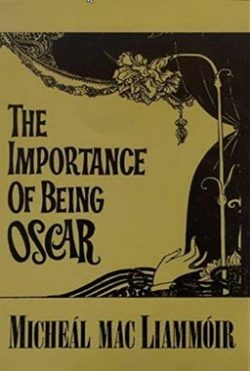 An Entertainment on the Life and Works of Oscar Wilde 21.6 x 13.8 cm. 71pp. 1995 Facsimile of the 1978 2nd Dolmen edition ISBN: 978-0-85105-510-7 Originally created by the author as a one man show that was first produced at the Gate Theatre in Dublin in 1960 to rapturous reviews, and over the next fifteen years performed by him all over the world, the most recent production was performed by Simon Callow at the Savoy Theatre in 1998. Originally published by the Dolmen Press in 1963, critics acclaimed the text as 'an outstandingly skilful and memorable tribute from one Irish artist to another' (Micheal O hAodha, The Irish Press), and 'every bit as Wildeanly witty as Oscar at his best' (Quidnunc in The Irish Times). The present printing uses the designs mac Liammóir produced for the record sleeves for his recording of the work.
 -
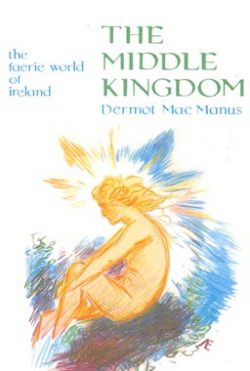 ISBN: 978.0.900675.82.9 21.6 x 13.0 cm. 191 pp. + 8 pp. illus. "[Among the books I read at the Beaconsfield Public Library] I remember being impressed by Dermot MacManus' The Middle Kingdom, which had a great effect on me, and is probably one of the most influential books I've ever read", Terry Pratchett (in his 1999 talk to the Folklore Society) 'No matter what one doubts,' wrote W.B.Yeats, 'one never doubts the faeries for . . . they stand to reason.' The author, an intimate friend of Yeats and a friend too of the great folklorist Douglas Hyde and the myriad-minded mystic G.W.Russell ('A.E.'), was a staunch believer in 'the ancient and continuing spirit life of the countryside'.
 -
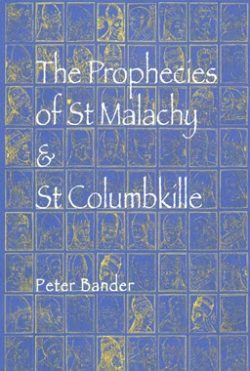 19.5 x 13.6 cm. 6th edition 2005 illustrated with papal coasts of arms from 1198 - Pope Innocent III to Pope Benedict XVI (1st edition 1969) This has been and still is one of the most popular books with which Peter Bander has been associated. It has gone through six editions and over a dozen printings, has been published in the USA and Europe, and since its first publication in 1969, extracts have appeared in many magazines, newspapers and journals. The present edition takes the reader up to the election of Pope Benedict XVI, 'gloriae olivae'. in 2005, the last pontiff to be given an epithet by St Malachy before 'Petrus Romanus'. So who will occupy the papal throne after the present pope and before Peter the Roman? His Excellency, the late Archbishop H.E. Cardinale, who was Apostolic Nuncio to Belgium, Luxembourg and the Common Market, following his term as Apostolic Delegate to Great Britain, wrote in his foreword to the Malachy Prophecies: "Here is a fascinating study which provides the curious reader with much profit and pleasure", quoting the Italian proverb "Se non è vero, è ben trovato" - If it isn't true, it's well thought out!
 -
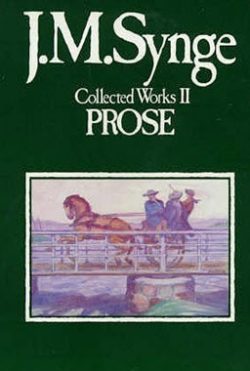 Edited by Alan Price paperback 21.4 cm. J.M.Synge died in 1909 and The Works of John M. Synge were published in four volumes by Maunsel & Co., Dublin, in 1910. Since that time, with the exception of a few minor verses and one or two fragments of prose, the canon of his work has remained unaltered. Nevertheless, much unpublished material exists, for the most part of great interest and significance for the understanding of Synge's methods of work and development. This material, including early drafts of the plays, notebooks, poems, and fragments of poetic drama, has now been thoroughly explored in order to create this definitive edition, first published by Oxford University Press 1962-68, which not only collects together all that is of significance in his printed and in his unprinted work, but also, by a careful use of worksheets and early drafts, indicates much of the process of creation which occurred before the production of the printed page. The Collected Works is in four volumes, under the general editorship of the late Professor Robin Skelton, of the University of Victoria, British Columbia, who began the series with his edition of the poems and translations.
 -
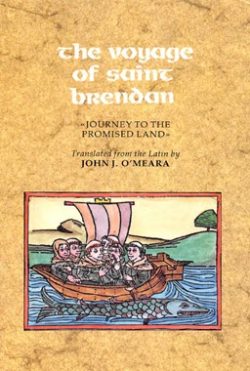 Written in about AD800, Navigato Sancti Brendani Abbatis is one of the most famous and enduring stories of western Christendom. While the question whether Saint Brendan reached America remains a subject of controversy, the tale itself is of great interest – a strongly integrated text which derives from several centuries of Irish literary tradition. The text is illustrated by the relevant woodcuts from a German version of the tale which was printed in Augsburg in 1476. John J. O’Meara has here translated one of the most famous and enduring stories of western Christendom, the Navigatio Sancti Brendani Abbatis, written in Ireland perhaps as early as the year 800. While the routes of Saint Brendan’s journeys remain a subject of controversy, the tale itself is of great interest – a strongly integrated text which derives from several centuries of Irish literary tradition.