

Beauty for Ashes. Selected Prose and Related Documents
Selected Prose & Related Documents
336 pp. 23.4 x 13.5 cm illus. in colour and monochrome
Poet of the Second World War and peacetime dramatist, Francis Warner was 75 this year (2012). This, the first selection from his prose, gives readers of his work some indication of the historical and intellectual background from which his poetry has sprung: of 'the giant race before the flood' who lived on to help shape Britain's post-war imagination.
Starting with memories of the Blitz and his poem 'Blitz Requiem', Warner recalls his schooldays at Christ's Hospital, Horsham, recovering from six years of war, and the role played by music.
He writes of his friends: 'Henry Chadwick: Musician', Kathleen Raine as fellow poet, C. S. Lewis and the Psalms, Henry Moore, Francis Bacon, Edmond Blunden, and Samuel Beckett, reproducing the manuscripts off two short plays Beckett discussed with and gave to him. Other subjects include W. B. Yeats, Benjamin Britten and the Japanese Noh plays, Samuel Palmer as poet, and Hugh Wybrew's Liturgical Texts of the Orthodox Church.
The book concludes with 'Francis Warner as Musician in Performance' an illustrative CD with music by Honegger, Vaughan Williams, and Warner's collaborator the composer and organist David Goode: and Stephen Cleobury conducting the Choir of King's College Cambridge singing one of their anthems.
Francis Warner DLitt, Hon. DMus, is Emeritus Fellow of St Peter's College, Oxford, and Honorary Fellow of St Catharine's College, Cambridge.
Contents
Armageddon and Faith: a Survivor's Meditation on the Blitz, 1940-45
Blitz Requiem
Remembrance Sunday Sermon, King's College Chapel, Cambridge, 2011
Four War Sonnets
Christ's Hospital Three and Sixty Years Ago
Henry Chadwick: Musician
The Song that is Christmas
A Cambridge Friendship: Kathleen Raine and Francis Warner
C. S. Lewis and the Revision of the Psalter
A Blessing on C. S. Lewis's home in Oxford, The Kilns
Foreword to Hugh Wybrew: Liturgical Texts of the Orthodox Church
The Bones and the Flesh: Henry Moore and Francis Bacon
Samuel Palmer's Poem 'The Sorceress'
James Joyce's Poetry
J. M. Synge's Poetry
Edmund Blunden's Pastoral Poetry
Richard Wall's rondeau cycle In Aliquot Parts
Japanese Noh plays and W. B. Yeats, Benjamin Britten and Samuel Beckett
Manuscript of Beckett's Breath
The Absence of Nationalism in the Work of Samuel Beckett
Manuscript of Beckett's Sans, and covering Letter
A Cup of Coffee in Paris, by Penelope Warner
Francis Warner as a Musician in the1950s, by Bernard Martin
Compact disc: Francis Warner as Musician in Performance
Anthem for Christ the King
Notes
Index


Dialogues in the Margin: A Study of the Dublin University Magazine
x, 252pp. 21.6cm
For decades, commentators on nineteenth-century Irish literature or history have routinely mentioned the significance of the Dublin University Magazine. Published monthly from January 1833 to December 1877, the DUM attracted as its contributors – and in several cases its editors – nearly every major Irish writer from this period. Prior to the publication of this work, however, there has been no systematic, book-length discussion of the magazine’s entire career.
In this study, Wayne Hall traces the dual nature of the magazine, its attention to both England and Ireland, which helps us to understand the sometimes guilty and reluctant, sometimes celebratory and passionate, union of these different cultural traditions and values. The DUM expressed a complex brand of Irish national identity that defines itself partly in cultural and partly in political terms.
In seeking its own balance between excluding and including, between culture and politics, the DUM developed one main pattern in its pages: the magazine’s political commentary stakes out the ideological ground with varying degrees of rigidity and exclusivity, while its literary contributions expand the magazine’s total scope to embrace a much wider and more generous vision of ‘Irishness’.
Within the terms and tensions of the journalistic dialogue, then, readers can see the political and the literary values jostling against each other. The magazine serves as a detailed and thorough record of conservative political thought in the nineteenth century, and also shows that Irish political events have drawn much of their shape from the literature, even as that literature was being shaped in turn by politics.
Wayne E. Hall is an associate dean at the McMicken College of Arts & Sciences at the University of Cincinnati, as well as a faculty member of the Department of English and Comparative Literature. His previous book was Shadowy Heroes: Irish Literature in the 1890s.

Selected Plays of Paul Vincent Carroll
Chosen and introduced by George Cusack
The sixteenth volume of the Irish Drama Selections series (ISSN 0260-7962), General Editors: Joseph Ronsley and Ann Saddlemyer.
21.6 x 13.8cm.
Contains: The Things That Are Caesar’s, Shadow and Substance, The Conspirators, The White Steed, The Devil Came from Dublin, and Goodbye to the Summer, articles about his and others' plays – 'The Substance of Paul Vincent Carroll', 'On Legend and the Arts', 'The White Steed', 'Scottish Drama', 'Can the Abbey be Restored?', 'Reforming a Reformer, 'The Rebel Mind' – and a bibliographical checklist.
Paul Vincent Carroll was the first Irish Catholic to write for the Irish National Theatre after Irish independence. As such, his work offers a unique perspective on Irish life in the early years of the Irish Free State and Irish Republic, particularly the influence of the Catholic Church in rural Ireland. He is particularly known for his depictions of the Catholic clergy, which are simultaneously critical, hopeful, and, above all, human.
Although Carroll was lauded in both Dublin and New York as a major new theatrical voice, virtually none of his work has been in print since his death in 1968.
George Cusack is the author of The Politics of Identity in Irish Drama: W. B. Yeats, Augusta Gregory, and J. M. Synge, and the co-editor of Hungry Words: Images of Famine in the Irish Canon. He received his PhD from the University of Oregon in 2003. He is currently the Director of the Edith Kinney Gaylord Expository Writing Program at the University of Oklahoma.
More info →

The Prose of J. M. Synge
Edited by Alan Price
paperback 21.4 cm.
J.M.Synge died in 1909 and The Works of John M. Synge were published in four volumes by Maunsel & Co., Dublin, in 1910. Since that time, with the exception of a few minor verses and one or two fragments of prose, the canon of his work has remained unaltered. Nevertheless, much unpublished material exists, for the most part of great interest and significance for the understanding of Synge's methods of work and development. This material, including early drafts of the plays, notebooks, poems, and fragments of poetic drama, has now been thoroughly explored in order to create this definitive edition, first published by Oxford University Press 1962-68, which not only collects together all that is of significance in his printed and in his unprinted work, but also, by a careful use of worksheets and early drafts, indicates much of the process of creation which occurred before the production of the printed page. The Collected Works is in four volumes, under the general editorship of the late Professor Robin Skelton, of the University of Victoria, British Columbia, who began the series with his edition of the poems and translations.
The second volume, edited by the late Dr Alan Price, of The Queen's University, Belfast, author of Synge and Anglo-Irish Drama, assembles all Synge's prose writings of any merit or interest. Over half of it consists of a reprint of The Aran Islands, and In Wicklow, West Kerry and Connemara, checked and supplemented where necessary by collation with Synge's own manuscripts and proofs. About a quarter consists of articles and reviews not previously collected, and the rest, including most of Part One, was never published before. Thus the prose of Synge can here be seen as a whole and should lead to a deeper understanding of both the writer and the Anglo-Irish literary revival. Thirty-five drawings by Jack B. Yeats are included.
These volumes were published in 1982 by arrangement with Oxford University Press.
More info → 
The Plays – Book 2
Edited by Ann Saddlemyer
ISBN: 978-0-86140-061-4
xxxvi, 304 pp. 21.4cm
J.M.Synge died in 1909 and The Works of John M. Synge were published in four volumes by Maunsel & Co., Dublin, in 1910. Since that time, with the exception of a few minor verses and one or two fragments of prose, the canon of his work has remained unaltered. Nevertheless, much unpublished material exists, for the most part of great interest and significance for the understanding of Synge's methods of work and development. This material, including early drafts of the plays, notebooks, poems, and fragments of poetic drama, has now been thoroughly explored in order to create this definitive edition, first published by Oxford University Press 1962-68, which not only collects together all that is of significance in his printed and in his unprinted work, but also, by a careful use of worksheets and early drafts, indicates much of the process of creation.
The Collected Works is under the general editorship of the late Professor Robin Skelton, of the University of Victoria, British Columbia. The first volume contains his edition of Synge's poems and translations; the second assembles all Synge's prose writings of any merit or interest, edited by the late Dr Alan Price, of The Queen's University, Belfast.
The third and fourth volumes are devoted to Synge's plays, edited by Professor Ann Saddlemyer, then of Victoria College, University of Toronto, now retired. The first of these volumes contains texts of Riders to the Sea, The Shadow of the Glen, and The Well of the Saints, and of the originally little known When the Moon has Set, with appendices analysing the drafts of each play and giving details of first productions. In addition the volume contains much unpublished material, scenarios, dialogues, and fragments, discovered among Synge's notebooks.
This volume provides definitive texts of The Tinker's Wedding, The Playboy of the Western World, and Deirdre of the Sorrows. For all these three plays recently discovered manuscript and notebook material has involved a certain amount of textual alteration; an examination of the long-lost final typescript of The Playboy of the Western World has provided many clues to the author's intentions, while comparison of the various drafts of Deirdre of the Sorrows with the typescript given by the executors to Yeats and Lady Gregory has enabled Dr Saddlemyer to determine the extent of posthumous collaboration.
Synge rewrote his plays many times; one act of The Playboy ran to at least fifteen full drafts, not counting numerous alterations. By examining each available draft of every play, the editor has been able to provide not only a final text of each play as close as possible to the dramatist's version, but in her accompanying notes almost a variorum study of significant passages. Appendixes record the growth of each play from the original scenario through many drafts to the final text, and include discarded scenes which throw new light on the playwright's creative process. Details of first productions and a comprehensive description of all the manuscript sources are also included. The introduction traces the history of each play, quoting extensively from Synge's unpublished correspondence and notebooks to record the dramatist's attitude to his own work in the making, and to set each play against the broader background of the Abbey Theatre. In searching out the material for this edition, Dr Saddlemyer has made use of public and private collections in both Ireland and the United States, and has also included a glossary and guide to pronunciation.
These volumes were published by arrangement with Oxford University Press.
More info →

The Plays – Book 1
Edited by Ann Saddlemyer
ISBN: 978-0-86140-060-7
J.M.Synge died in 1909 and The Works of John M. Synge were published in four volumes by Maunsel & Co., Dublin, in 1910. Since that time, with the exception of a few minor verses and one or two fragments of prose, the canon of his work has remained unaltered. Nevertheless, much unpublished material exists, for the most part of great interest and significance for the understanding of Synge's methods of work and development. This material, including early drafts of the plays, notebooks, poems, and fragments of poetic drama, has now been thoroughly explored in order to create this definitive edition, first published by Oxford University Press 1962-68, which not only collects together all that is of significance in his printed and in his unprinted work, but also, by a careful use of worksheets and early drafts, indicates much of the process of creation which occurred before the production of the printed page.
The Collected Works is in four volumes, under the general editorship of the late Professor Robin Skelton, of the University of Victoria, British Columbia. The first volume contains edition of Synge's poems and translations, the second assembles all Synge's prose writings of ant merit or interest, edited by the late Dr Alan Price, of The Queen's University, Belfast.
The third and fourth volumes are devoted to Synge's plays, edited by Professor Ann Saddlemyer, then of Victoria College, University of Toronto, now retired. Only five of the plays were published during Synge's lifetime. One emptied the Abbey Theatre, yet was the first of its productions to be translated and performed on the Continent; one caused riots in both Britain and America; one was considered 'too dangerous' to be performed in Ireland. All were written during the last seven years of Synge's life, for the Abbey Theatre, of which he was co-director with W. B. Yeats and Lady Gregory. But although his output was comparatively slight, Synge's contribution to the development of modern drama is immeasurable.
In the first volume of the plays we see the development of the playwright's craft. Definitive texts, based on Synge's own notebooks and typewritten drafts, are provided of Riders to the Sea, The Shadow of the Glen, and The Well of the Saints. Included is his controversial first play, When the Moon Has Set, rejected three times by his co-directors, yet carefully preserved by Synge among his papers. Other material discovered among his notebooks, scenarios, dialogues, and fragments, written between 1894 and 1908, indicates not only the scrupulousness with which Synge studied his art, but his rich and fertile imagination. A comprehensive introduction records the history of each play in the making, from genesis to finished product, at the same time setting Synge's work within the larger context of his experience as director and producer and quoting from his own letters documenting his progress. Appendices analysing the drafts of each play and giving details of first productions provide further bibliographical information and describe the numerous manuscript sources tracked down by the editor in public and private collections in both Ireland and the United States.
The second volume of plays contains texts of The Tinker's Wedding, The Playboy of the Western World, and Deirdre of the Sorrows, with similar notes and appendices.
These volumes were published by arrangement with Oxford University Press.
More info →


Irish Fiction Since the 1960s
This collection of fourteen substantial essays has been designed to map the landscape of Irish fiction since 1960, and to assess the extraordinary literary achievement of Irish novelists and short story writers, North and South of the border, over the last forty years.
As this volume demonstrates, Irish novelists and short story writers since 1960 have both continued and challenged conventional notions of Irish fiction; and they have contributed, in stimulating and inventive style, to the continuous examination of Irish identity, culture and politics, while making their fiction resonate with wide cultural, intellectual and human interest.
The book includes essays which focus on major individual writers - Samuel Beckett, Brian Moore, Jennifer Johnston, Maurice Leitch, John McGahern, Patrick McGinley and John Banville. There are also general essays of a more explicitly comparative and thematic nature covering such topics as the impact of modernisation on Irish fiction, the contemporary ‘Big House’ novel, the Protstant imagination, the ‘Troubles’ Novel, the importance of the past, childhood and women’s narratives, constructions of masculinity, and women short story writers. By closely analysing key texts, exploring the relationships between texts, and also between texts and their social, cultural and political contexts, and by examining significant themes and preoccupations, these essays offer valuable insights into the variety and complexity of modern Irish fiction from a range of viewpoints.
Contents
Introduction: The New Humanism. Elmer Kennedy-Andrews
Part 1: Thematic and Comparative Studies<br
‘Something important had changed’: Modernisation and Irish Fiction since 1960. Patrick Walsh<br
Ivy over Imperial Ireland: The Irish Big House Novel since 1960. Robin Marsh<br
‘Fabled by the Daughters of Memory’: History as Nightmare in Contemporary Irish Fiction. Robert Garratt<br
Shadows of the Gunmen: The Troubles Novel. Elmer Kennedy-Andrews<br
How I Achieved this Trick’: Representations of Masculinity in Contemporary Irish Fiction. Eamonn Hughes<br
To Say ‘I’: Female Identity in The Maid’s Tale and The Wig my Father Wore. Heidi Hansson Part 2: Individual Author studies<br
Beckett after 1960: A Post-Humanist Context. Paul Davies<br
The Art of Science: Banville’s Doctor Copernicus. Declan Kiberd<br
‘A Shocking Libel on the People of Donegal’? The Novels of Patrick McGinley. John Goodby and Jo Furber<br
Form, Theme and Genre: The Importance of Catholics in Brian Moore’s Work. Kathleen Devine<br
The Remains of Protestantism in Maurice Leitch’s Fiction. Barry Sloan<br
Jennifer Johnston: Tremors of Memory. Richard York<br
‘All Toppers’: Children in the Fiction of John McGahern. Patrick Crotty

Irish Writers and their Creative Process
This volume contains the lectures delivered at Caen University in June 1992 for an international symposium organised by the Research Group in Anglo-Irish studies.
In memory of our dear friend, Gus Martin, 1935-1995
The theme was the creative process, successively studied in three literary genres: poetry, drama and the novel. Professor Genet selected two of the most famous representatives of each genre – Seamus Heaney and John Montague, Thomas Kilroy and Tom Murphy, John McGahern and John Banville – asking them to speak of their own creation: what happens in their minds during the birth and development of the creative work? A question that is far-reaching, abstruse and certainly indiscreet.
To challenge the writers slightly more, she had placed in front of each of them a critic – Maurice Harmon, Augustine Martin, Christopher Murray, Lynda Henderson, John Cronin, Rudiger Imhof – each of whom expounded their own point of view on the same phenomenon. These inner and outer perspectives generally converged and their complementarity throws a vivid light on the mystery of artistic creation. That was the purpose of the meeting and also the aim of this book, which should be essential reading for anyone wishing to understand the creative process of writing.
CONTENTS
Introduction. Jacqueline Genet
I. The Irish Poets and the Creative Process
Seamus Heaney. 'The Frontier of Writing'
Maurice Harmon. 'Seamus Heaney and the Gentle Flame'
John Montague. 'The Sweet Way'
Augustine Martin. 'John Montague: Passionate Contemplative'
II. The Irish playwrights and the Creative Process'
Thomas Kilroy. 'From Page to Stage'
Christopher Murray. 'Thomas Kilroy's World Elsewhere'
Tom Murphy. 'The Creative Process'
Lynda Henderson. 'Men, Women, and the Life of the Spirit in Tom Murphy's Plays'
III. The Irish Novelists and the Creative Process
John McGahern. 'Reading and Writing'
John Cronin. 'John McGahern: A New Image?'
John Banville. 'The Personae of Summer'
Rudiger Imhof. 'In Search of the Rosy Grail: The Creative Process in the Novels of John Banville'
Notes
Index
More info →

Perspectives of Irish Drama and Theatre
Irish Literary Studies series 33
This volume gives a comprehensive view of Irish drama. studied chronologically from the nineteenth century to the present day. as well as considering its international impact. The study of the plays dealing with the lives of Deirdre and Grania rehabilitates Lady Gregory’s Grania. The similarities between Yeats and Beckett are pointed out: both were concerned with the actor considered as a marionette – Yeats, nearly sixty years before Beckett, had thought of rehearsing actors in barrels. Beckett's Irishness is also examined.
The image of Ireland in nineteenth-century drama is no longer an uncharted territory, while the problem of translation is considered in an essay on Joyce's translation into Italian of Riders to the Sea and one on Brian Friel's play Translations. There is also a more general essay on this major playwright. Synge's influence on other playwrights is also considered, while another contribution explores the three adaptations of Antigone, by Brendan Kennelly. Tom Paulin. and Aidan Carl Mathews: and after a study of Thomas Kiiroy's theatre, there is a view of the Field Day Theatre Company. The question of language is at the core of Thomas Murphy's drama, while MacNeice's perception of Irish history is studied through his They Met on Good Friday. John Hewitt's The Bloody Brae is situated in Irish drama and specifically in Ulster drama.
Throughout these essays, which constitute a network encompassing the different aspects of the Irish Theatre, we find recurring political and social problems, but also the universal topics of literature, the question of language and the care for art and stagecraft. The different literary approaches throw an interesting light on the vitality of the genre in Ireland.
All have developed from the papers given at the International Association for the Study of Anglo-Irish Literature's 1987 conference held at the University of Caen, and hosted by Professor Jacqueline Genet, then President of the University. The contributors are Richard Allen Cave, Colin Meir, Margaret Rose, Katherine Worth, Heinz Kosok, Maureen S.G. Hawkins, Britta Olinder, Paul F. Botheroyd, Joan Fitzgerald, Lucia Angelica Salaris, the late Patrick Rafroidi, Christopher Murray, Denis Sampson, Patrick Burke, and Joseph Swann.
More info →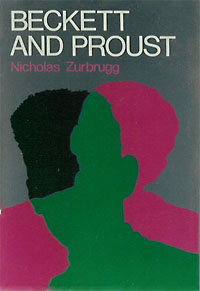
Beckett and Proust
Ever since the first appearance of Proust in 1931, Samuel Beckett has responded extremely ambivalently, both praising and belittling his subject. Captivated by his occasionally contagious enthusiasm for it, Beckett's own critics have praised Proust as the ideal guide to both its subject and its author, creating the myth that their concerns are somehow one and the same.
Nicholas Zurbrugg's work – itself virtually a trilogy of critical studies – offers a timely antidote to this confusion. He begins by reassessing the Proustian vision before considering Beckett's Proust when he examines the evolution of this essay with particular reference to Beckett's own annotated copies of the work. Finally he reassesses Beckett's fictional vision, arguing that its peculiarly anti-Proustian character may be traced from his first, unpublished novel, Dream of Fair to Middling Women, to Company and his most recent writing of the 1980s.
I found [it] such compelling reading that once I had started I could not lay it down. . . . No-one can read this without learning much that is permanently useful not only about its central subjects, but also about lines of influence in modern literature, and about the nature of literary experiences. . . . I am sure I shall have cause to reread it many times.' Professor S.S.Prawer
More info →
Literature and the Art of Creation
ISBN 978-0-86140-252-6
This volume of critical essays and of creative writings brings together work by distinguished authors in many fields in honour of Alexander Norman Jeffares: English literature, Irish and Anglo-Irish Literature and Commonwealth literature, all fields which gained his interest throughout his life and to which he has contributed much, both through the spoken and printed word – as can be’ seen from the bibliography of his writings at the end of this volume.
Scholarship and criticism are deployed by the essayists to show how literature, by virtue of its creativity, offers a human and vivid insight into the individual in his or her society.
Poets and imaginative writers of many traditions deepen and extend our understanding of the creative impulse and its immediacy through their own work.

Irish Writers and Religion
IASAIL-JAPAN series Volume 4
In Memory of Barbara Hayley
This volume analyses the interplay between religion and society in Ireland and how Irish writing, whether poetry, prose, drama, sermon or pamphlet, has reflected that interplay, and how the idea of wholeness and integration, as part of the religious search, informs Irish writing.
Irish literature has been influenced by religion from the beginning. Writing itself came about as a result of the conversion to Christianity, because the early church brought with it a Latin orthography which the native men of learning adopted. Pagan beliefs and practices were assimilated into Christianity, but not entirely so: a theme that surfaces continually in Irish writing is the conflict between Pagan and Christian values. This tension is also an interaction: one of the characteristics of Irish literature of all periods is its capacity to retain pagan stories and modes of thought. This retention reflects a society which, while Christianised, has many roots in a pre-Christian Celtic past.
The essays follow a broadly chronological pattern covering every facet of the subject, starting with Paganism in early Ireland, and moving on to the literary uses of folk belief and religion in the 18th, 19th, and 20th centuries.
CONTENTS
'Paganism and Society in Early Ireland'. Séamus MacMathúna
'Literature and Religion in Eighteenth-Century Ireland: A Critical Survey'. Joseph McMinn
'Religion and Society in Nineteenth-Century Fiction'. Barbara Hayley
'The Word, the Lore, and the Spirit: Folk Religion and the Supernatural in Modern Irish Literature'. Dáithi Ó hÓgáin
'Ghosts in Anglo-Irish Literature'. Peter Denman
'Shaw and Creative Evolution'. A. M. Gibbs
'Catholicism in the Culture of the New Ireland: Canon Sheehan and Daniel Corkery'. Ruth Fleischmann
'Yeats and Religion'. Mitsuko Ohno
'Joyce and Catholicism'. Eamonn Hughes
'Francis Stuart and Religion: Sharing the Leper's Lair'. Anne McCartney
'Received Religion and Secular Vision: MacNeice and Kavanagh'. Alan Peacock
'"A mythology with which I am perfectly familiar": Samuel Beckett and the Absence of God'. Lance St John Butler
'Pilgrim's Progress: on the Poetry of Desmond Egan and Others'. Patrick Rafroidi
'Religion?'. Desmond Egan
'Mis and Dubh Ruis: A Parable of Psychic Transformation'. Nuala ni Dhomhnaill
Notes
Notes on Contributors
Index

Irish Poetry from Moore to Yeats
Irish Poetry from Moore to Yeats examines the work of seven of the most significant Irish poets of the nineteenth century. Beginning with the impact that Thomas Moore's nationalist sentiment and generalised tone had on the language of poetry for much of the century, Dr. Welch then discusses J. J. Callanan’s attempt to deal with a Byronic restlessness and his startling translations from the Gaelic. He shows how James Clarence Mangan tested out different ‘voices’ to express his psychic plurality and discovered a special freedom in his versions of Gaelic originals. He describes the foundering of Samuel Ferguson’s vision of the reconciliation of Gaelic and Protestant traditions and demonstrates how the transcendental Catholicism of Aubrey de Vere mirrored Ireland’s historical difficulties. He surveys William Allingham's scope, fairmindedness and attention to detail, and lastly considers the comprehensive power of W. B. Yeats’s searching, qualifying imagination that informs his early work.
A tradition emerges, composite, flawed, passionate, rhetorical, anxious; its intricate entanglements underlie many of the preoccupations of twentieth century Irish life and writing.
CONTENTS
Acknowledgements
Introduction
1. Thomas Moore: An Elegiac Silence
2. J. J. Callanan: A Provincial Romantic
3. James Clarence Mangan: 'Apples from the Dead Sea Shore'
4. Sir Samuel Ferguson: The Two Races of Ireland
5. Aubrey de Vere: An Attempt at a Catholic Humanity
6. William Allingham: 'The power and zest of all appearance'
7. Yeats and Oisin
Notes
List of Works Cited
Index

A History of Verse Translation from the Irish, 1789-1897
This study surveys the course of verse translation from the Irish, starting with the notorious Macpherson controversy and ending with the publication of George Sigerson’s Bards of the Gael and Gall in 1897. Professor Welch considers some of the problems and challenges relating to the translation of Irish verse into English in the context of translation theory and ideas about cultural differentiation.
He outlines the historical and cultural background of Anglo-Irish literary relations in the seventeenth and eighteenth centuries and the surprising fashion for Celticism at the end of that period. It was this cultural phenomenon that provided the context for the endeavours of Charlotte Brooke and of later translators to render something of the spirit of Gaelic poetry in English verse. Throughout the book, we see again and again the dilemma of poets who must be faithful to the spirit or the form of Irish verse, but who rarely have the ability to capture both.
The relationship between Irish and English in the nineteenth century was, necessarily, a critical one, and the translators were often working at the centre of the crisis, whether they were aware of it or not. As Celticism evolved into nationalism and heroic idealism, these influences can be clearly seen in the development of verse translation from the Irish.

J. M. Synge and the Western Mind
21.6 x 13.8 cm Irish Literary Studies series 4
Professor Thornton’s book calls into question the ideas generally held by critics of Synge that the religious milieu he was reared in had slight influence upon him, that his relationships with his family were of virtually no importance to him, and that he cared little for matters concerning ‘belief’ generally. The view presented here is that Synge was always more concerned about beliefs than he appeared to be with his taciturn public manner, and that the theme of the relationship between ‘beliefs’ and ‘reality’ is basic to his work.
This volume examines the impact the early years of Synge’s life and his visits to the Aran Islands had on him, generating themes and devices that became the staples of his drama. Dr. Thornton defines the philosophical premises which underlie the major plays and the developing theatrical techniques Synge devised to embody his explorations of the nature of belief. Deirdre of the Sorrows marks a fitting culmination to his career, showing how completely Synge had transformed his concern with stereotypes of response from a realisation to be articulated or a philosophical problem to be solved into a tool to facilitate the discovery of his individual viewpoint.
CONTENTS <br
Acknowledgements<br
Introduction<br
I. Seed Time of the Soul<br
II. The Verge of the Western World<br
III. The Shock of Some Inconceivable Idea<br
IV. First Fruits: The Shadow of the Glen; Riders to the Sea; The Tinker's Wedding<br
V. Dreamer's Vexation or Poet's Balm?: The Well of the Saints and The Playboy of the Western World<br
VI. A Sense that fits him to perceive objects unseen before: Deirdre of the Sorrows<br
Conclusion<br
Bibliography<br
Index

A Reader’s Guide to Dorothy Richardson’s ‘Pilgrimage’
Over the years, Pilgrimage (1915-1967) has been viewed as early Modernism's great documentary novel, as daring experimental fiction, as spiritual autobiography and pioneer of cinematographic technique. No matter what critical viewpoint readers use, Pilgrimage's reputation as a demanding text persists. Like James Joyce's Ulysses, Richardson's 2000 intricately woven pages have challenged readers for decades.
She explores a new way of presenting reality in Pilgrimage, one that is immediate rather than retrospective. As the resulting chronicle of events extends itself, however, the larger picture grows puzzling. Scenes change suddenly, characters spring from the long forgotten past, years disappear without a trace.
A Reader's Guide meets these difficulties with a detailed account of the time scheme of the narrative, and a precise chronology of events keyed to the novels by page number for easy reference. Relationships among the principal persons of the story are followed throughout, and all the characters are placed in context in an alphabetically arranged descriptive directory. The book concludes with a select annotated secondary bibliography.
Thomson's practical scholarship bridges the ruptures and absences in Richardson's narrative to help readers master Pilgrimage in its broader outlines, in its structure, time-scheme, and character relations. Kristin Bluemel, author of Experimenting on the Borders of Modernism: Dorothy Richardson's 'Pilgrimage' (University of Georgia, 1996), aptly captures Thomson's achievement:
"A Reader's Guide to Dorothy Richardson's 'Pilgrimage' does more than serve as a long-awaited reference tool; it also reminds us of the way Richardson's luminous multi-volume novel participates, despite or even because of all its difficulties of time, in the ongoing debates about the critical practices and literary priorities of modernity."
More info →
Notes on Pilgrimage: Dorothy Richardson Annotated
Dorothy Richardson's thirteen-volume Pilgrimage is crowded with references from the last decade of the Victorian era and the first decade of the twentieth century. The interests of the protagonist Miriam Henderson are wide-ranging, from ecology to economics, from fiction to philosophy, from the mores of the family to the morals of the nation. Pilgrimage's stream-of-consciousness narrative evokes these references and interests in elusive, complex ways. Even accomplished readers, following in the wake of the heroine's personal revelations, are hard-pressed to understand aspects of the more public scene from turn-of-the-century England.
Notes on 'Pilgrimage', by identifying historical persons, events, ideas, quotations and writings that underpin Richardson's story, illuminates these factual details and enriches understanding of the narrative. A translation of all foreign words and phrases, a record of textual misprints and a thorough index add to the value of the book.
Professor Thomson has for many years studied one of British literature's most challenging, most rewarding, most underestimated masterpieces. Notes on 'Pilgrimage': Dorothy Richardson Annotated is the culmination of that splendid research.
This new book complements Thomson's 1996 A Reader's Guide to Dorothy Richardson's 'Pilgrimage', an account of the time scheme and a precise chronology of events, with characters placed in context through a descriptive directory. Together Notes on 'Pilgrimage' and A Reader's Guide to Dorothy Richardson's 'Pilgrimage' make a lasting contribution to the study of Dorothy Richardson and will be asked for by students and scholars for decades to come.

A Guide to the Books of William Blake for Innocent and Experienced Readers
With notes on interpretive criticism 1910 to 1984
ISBN 978-0-86140-408-7 874pp.
The writings of William Blake were not understood by his contemporaries or the Victorians, and it was only in 1910, with the publication of Joseph Wicksteed's Blake's Vision of the Book of Job, that the long process of comprehending Blake's works seriously began.
Part 1 of the present work consists of twelve chapters that are primarily intended to lead the reader who has little or no acquaintance with Blake's more difficult works through all his books. These consist of Poetical Sketches, Songs of Innocence and of Experience, three early prose tractates, the eleven shorter prophetic books (including The Marriage of Heaven and Hell), the lyrics of the Pickering Manuscript, The Four Zoas, Milton, Jerusalem, The Gates of Paradise, The Ghost of Abel and Illustrations of The Book of Job.
The reader who wishes to explore a work more fully can proceed to Part II, where a headnote outlines the main scholarly views of its structure and meaning. The headnote for each book is followed by a survey, laid out line by line, of how such details as proper names, Blakean symbols, political allusions, and obscure phrases have been interpreted. Where there are engraved designs, these are covered in a comparable fashion. Part II will also be useful to those who want an overview of the interpretations of a particular work or passage and to readers interested in the evolution of twentieth-century understanding of Blake.
There are two indexes providing ready access to explanations of terms and proper names.
'Its nearly 900 pages comprise the most helpful overview of Blake's works and of Blake criticism I have ever come across... Highly recommended.' Bill Goldman in The Journal of the Blake Society
HENRY SUMMERFIELD teaches in the Department of English at the University of Victoria, British Columbia. He is author of That Myriad-Minded Man, A Biography of G.W.Russell - 'AE', is General Editor of the Collected Works of G.W.Russell, and editor of A Selection from the Contributions to 'The Irish Homestead' by Russell. He is also author of An Introductory Guide to The Anathemata and the Sleeping Lord Sequence of David Jones.