
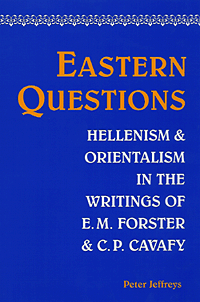
Eastern Questions. Hellenism and Orientalism in the Writings of E. M. Forster and Constantine Cavafy
What is the relationship between E. M. Forster’s quintessentially British novels, stories and essays and the abstrusely historical and erotic musings of the Greek poet C. P. Cavafy? The answer is both complex and illuminating.
The apparent differences are bridged by Forster’s penchant for antiquities and interest in matters Oriental, by Cavafy’s Anglophilia and British education. While these facts have generated comparative criticism that places novelist and poet in a Hellenistic continuum, the scholarly discussion to date has overlooked the ideological tensions that separate these two important modernists along a cultural divide. Hellenism is a way into their shared interests in the classical past, yet it also marks a point of dissension regarding the essence of Greek civilization. Similarly, their Orientalist visions led them to radically diverse configurations of the East.
Dr. Jeffreys’s parallel reading of Forster and Cavafy explains not only how Forster and Cavafy were both rooted in Western Hellenism, but also how their suppositions about it diverged significantly and how the two confronted the Orient in quite different ways. New light is also cast on their friendship; their different political views may have impeded its development.
Eastern Questions: Hellenism and Orientalism in the Writings of E. M. Forster and C. P. Cavafy makes use of unpublished documents, newly edited unfinished poetry (here made available for the first time to an English readership), and lesser-known texts, both fictional and nonfictional. The exchange between literary and non-literary texts, prose and poetry, focuses the ideological centre of Forster’s lifelong engagement with Greece and India and identifies the essence of Cavafy’s prolonged fixation on matters Hellenic. In the process Jeffreys’s New Historicist study applies contemporary critical trends in modern Greek studies to Forster criticism, producing an incisive, fresh reading of the relationship and the Cavafy and Forster canons.
More info →
Translations, Adaptations and Collaborations, being the Fourth Volume of the Collected Plays
General Editors of the Coole Edition: T.R.Henn CBE and Colin Smythe
Edited and with a Foreword by Ann Saddlemyer
As well as writing her own plays, Lady Gregory tried her hand at translating some of Molière's plays into the Kiltartan dialect for performance on the Abbey stage. Her volume of these translations entitled The Kiltartan Molière (Maunsel, 1910) contained The Miser, The Doctor in Spite of Himself and The Rogueries of Scapin. Judging by the press reviews of the time, she was eminently successful in her efforts. Fifteen years later Mirandolina was published, and in 1928 The Would-be Gentleman and Sancho's Master were published in Three Last Plays with one of her supernatural plays, Dave. Sudermann's Teja was first performed in 1907 at the Abbey Theatre but never published.
Lady Gregory collaborated with W. B. Yeats on a number of his plays, but such was her natural shyness that she would not allow her name to be put to any but The Unicorn from the Stars; although it is safe to assume that wherever the Kiltartan dialect appears in Yeats's plays, Lady Gregory had a hand. However, only that play jointly signed is included here. Among the Lady Gregory papers, now in the Berg Collection of the New York Public Library, is the typescript of their joint play Heads or Harps, which is here published for the first time together with an incomplete variant version. Lady Gregory also collaborated with Douglas Hyde over The Poorhouse and later with his permission completely rewrote it as The Workhouse Ward, reducing the number of characters and tightening up the plot. Her direct translations of Douglas Hyde's plays appear in Poets & Dreamers.
Volume I of the Collected Plays contains The Comedies; Volume II The Tragedies and Tragic-Comedies and Volume III, Wonder and the Supernatural. Each volume is edited and has a foreword by Professor Saddlemyer

The Unicorn from the Stars
Edited, with an Introduction and Notes, by Katharine B. Worth
First published in 1903, Where There Is Nothing was never reprinted in the author’s lifetime. It lost its place in collected editions of Yeats’s plays to a new version, The Unicorn from the Stars, in which Lady Gregory had a major share. There has long been a need for an edition of Where There Is Nothing to restore to general view an interesting play which, unusually for Yeats, has a modern setting, a middle-class hero, and a predominantly naturalistic technique.
Yeats gave various reasons for abandoning the original play. Perhaps one he did not mention was his doubt whether its open and direct style and modem Irish background might not identify the author too closely with the visionary central character, Paul Ruttledge. Many of Yeats’s deepest preoccupations are reflected in Paul’s pursuit of his apocalyptic vision: he abandons a life of bourgeois comfort for hard freedom among the tinkers, follows a religious life in a monastery, and finally dies a martyr at the hands of a mob who cannot understand his ecstatic message: “Where there is nothing, there is God.”
The drastically revised version, The Unicorn from the Stars, changes the period and social milieu and introduces new characters and plot complications which bear the marks of Lady Gregory’s distinctive style. Both plays are included in this volume to allow comparison of the plays themselves and to throw light on the characteristic methods of these two preeminent playwrights.

Irish Writers and their Creative Process
This volume contains the lectures delivered at Caen University in June 1992 for an international symposium organised by the Research Group in Anglo-Irish studies.
In memory of our dear friend, Gus Martin, 1935-1995
The theme was the creative process, successively studied in three literary genres: poetry, drama and the novel. Professor Genet selected two of the most famous representatives of each genre – Seamus Heaney and John Montague, Thomas Kilroy and Tom Murphy, John McGahern and John Banville – asking them to speak of their own creation: what happens in their minds during the birth and development of the creative work? A question that is far-reaching, abstruse and certainly indiscreet.
To challenge the writers slightly more, she had placed in front of each of them a critic – Maurice Harmon, Augustine Martin, Christopher Murray, Lynda Henderson, John Cronin, Rudiger Imhof – each of whom expounded their own point of view on the same phenomenon. These inner and outer perspectives generally converged and their complementarity throws a vivid light on the mystery of artistic creation. That was the purpose of the meeting and also the aim of this book, which should be essential reading for anyone wishing to understand the creative process of writing.
CONTENTS
Introduction. Jacqueline Genet
I. The Irish Poets and the Creative Process
Seamus Heaney. 'The Frontier of Writing'
Maurice Harmon. 'Seamus Heaney and the Gentle Flame'
John Montague. 'The Sweet Way'
Augustine Martin. 'John Montague: Passionate Contemplative'
II. The Irish playwrights and the Creative Process'
Thomas Kilroy. 'From Page to Stage'
Christopher Murray. 'Thomas Kilroy's World Elsewhere'
Tom Murphy. 'The Creative Process'
Lynda Henderson. 'Men, Women, and the Life of the Spirit in Tom Murphy's Plays'
III. The Irish Novelists and the Creative Process
John McGahern. 'Reading and Writing'
John Cronin. 'John McGahern: A New Image?'
John Banville. 'The Personae of Summer'
Rudiger Imhof. 'In Search of the Rosy Grail: The Creative Process in the Novels of John Banville'
Notes
Index
More info →

Perspectives of Irish Drama and Theatre
Irish Literary Studies series 33
This volume gives a comprehensive view of Irish drama. studied chronologically from the nineteenth century to the present day. as well as considering its international impact. The study of the plays dealing with the lives of Deirdre and Grania rehabilitates Lady Gregory’s Grania. The similarities between Yeats and Beckett are pointed out: both were concerned with the actor considered as a marionette – Yeats, nearly sixty years before Beckett, had thought of rehearsing actors in barrels. Beckett's Irishness is also examined.
The image of Ireland in nineteenth-century drama is no longer an uncharted territory, while the problem of translation is considered in an essay on Joyce's translation into Italian of Riders to the Sea and one on Brian Friel's play Translations. There is also a more general essay on this major playwright. Synge's influence on other playwrights is also considered, while another contribution explores the three adaptations of Antigone, by Brendan Kennelly. Tom Paulin. and Aidan Carl Mathews: and after a study of Thomas Kiiroy's theatre, there is a view of the Field Day Theatre Company. The question of language is at the core of Thomas Murphy's drama, while MacNeice's perception of Irish history is studied through his They Met on Good Friday. John Hewitt's The Bloody Brae is situated in Irish drama and specifically in Ulster drama.
Throughout these essays, which constitute a network encompassing the different aspects of the Irish Theatre, we find recurring political and social problems, but also the universal topics of literature, the question of language and the care for art and stagecraft. The different literary approaches throw an interesting light on the vitality of the genre in Ireland.
All have developed from the papers given at the International Association for the Study of Anglo-Irish Literature's 1987 conference held at the University of Caen, and hosted by Professor Jacqueline Genet, then President of the University. The contributors are Richard Allen Cave, Colin Meir, Margaret Rose, Katherine Worth, Heinz Kosok, Maureen S.G. Hawkins, Britta Olinder, Paul F. Botheroyd, Joan Fitzgerald, Lucia Angelica Salaris, the late Patrick Rafroidi, Christopher Murray, Denis Sampson, Patrick Burke, and Joseph Swann.
More info →
A Servant of the Queen
Edited by A. Norman Jeffares and Anna MacBride White
21.6 x 13.8 cm. paperback
Maud Gonne MaeBride is part of Irish history: her foundation of the women's group Inghinidhe na hEireann. the Daughters of Ireland, in 1900, was the key that effectively opened the door of politics in the twentieth century to Irishwomen. Still remembered in Ireland for the fiery, emotive public speeches she made on behalf of the suffering – those evicted from their homes in the West of Ireland, the Treason-Felony prisoners on the Isle of Wight, indeed all those whom she saw as victims of the imperialism she constantly opposed – she is known, too, within and outside Ireland as the woman W. B. Yeats loved and celebrated in his poems.
He wrote poems to and about her after they first met in 18S9, and he continued to do so in his middle age and up to his seventies. when he remembered her ‘straight back and arrogant head’, her gentleness, and her wildness. And something of those extremes in her character becomes clear in her autobiography, A Servant of the Queen, which brings her life up to her marriage to John MaeBride in 1903.
This is no orthodox autobiography: it selects episodes – many of them highly dramatic – in her life rather than providing a more pedestrian progress through all its events. The book conveys her romanticism and suggests how wide a range of activities she pursued as a fervent nationalist, persuasive propagandist, and successful journalist. Her sheer courage emerges clearly but though she held mere convention in contempt she had to exercise some discretion in writing these memoirs. The editors have identified some hitherto unnamed characters and established the identity of persons given other names in earlier editions: they have indicated some of the episodes in Maud Gonne's life – notably her liaison with the French politician Lucien Millevoye – that she was obliged to omit in the first edition (1937). A Servant of the Queen is written in a characteristically dashing conversational style and reveals the complexity of Maud Gonne's character: it is a most readable account of aspects of a vital, exciting life which has maintained its interest to historians and students. In this new edition, the editors, who compiled The Gonne-Yeats Letters 1893-1938, have corrected the order of the chapters so that they are now arranged according to the sequence of events, and have added a chronology, notes on the principal figures, and an index.
More info →

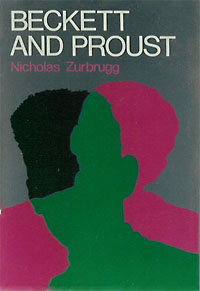
Beckett and Proust
Ever since the first appearance of Proust in 1931, Samuel Beckett has responded extremely ambivalently, both praising and belittling his subject. Captivated by his occasionally contagious enthusiasm for it, Beckett's own critics have praised Proust as the ideal guide to both its subject and its author, creating the myth that their concerns are somehow one and the same.
Nicholas Zurbrugg's work – itself virtually a trilogy of critical studies – offers a timely antidote to this confusion. He begins by reassessing the Proustian vision before considering Beckett's Proust when he examines the evolution of this essay with particular reference to Beckett's own annotated copies of the work. Finally he reassesses Beckett's fictional vision, arguing that its peculiarly anti-Proustian character may be traced from his first, unpublished novel, Dream of Fair to Middling Women, to Company and his most recent writing of the 1980s.
I found [it] such compelling reading that once I had started I could not lay it down. . . . No-one can read this without learning much that is permanently useful not only about its central subjects, but also about lines of influence in modern literature, and about the nature of literary experiences. . . . I am sure I shall have cause to reread it many times.' Professor S.S.Prawer
More info →
Erskine H. Childers, President of Ireland. A Biography
21.6 x 13.8 cm. with 24 illus.
Hurriedly summoned from his English public school in November 1922, Erskine Childers was permitted by the Free State authorities to make one brief, final visit to his condemned father in the cells of Portobello Barracks, Dublin, at the height of the Civil War. Not surprisingly, such an emotional ordeal had a profound and lasting impact on the sixteen-year-old boy, who had promised his father in the death-cell to shake hands with and forgive every Minister in the Provisional Government who were responsible for his death, and that if he entered Irish politics himself he would never mention the execution in public, and do everything possible to ensure that the Childers name would become a healing memory.
A little over half a century later when that same schoolboy became President of Ireland he was universally regarded as a man of peace. His sudden death after only eighteen months in office brought the largest gathering of monarchs and rulers ever to assemble on Irish soil, to pay tribute to Erskine Childers in St. Patrick’s Cathedral, while people wept openly in the streets outside.
This work tells of the patient determination that nothing and no one would divert Erskine Childers from the exacting task he had promised to undertake, and of the very considerable contributions to Ireland that he was able to make in the process, in the various ministeries that he headed, and finally as the country’s first citizen, the fourth President of the Republic of Ireland.
Mr. Jack Lynch, Ireland’s premier from 1966-73, and 1977-79, has written a foreword for this biography.
More info →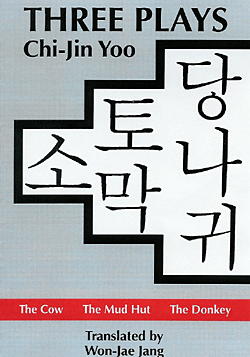
Three Plays
Translated by Won-Jae Jang
In his study Irish Influences on Korean Theatre during the 1920s and 1930s, Won-Jae Jang alerted scholars to a previously unexamined example of intercultural exchange in which Korean scholars looked to Irish writers and especially Irish dramatists to help them find a way of freeing themselves from the cultural imperialism of Japan. They studied the stated aims of Yeats, Lady Gregory and Synge in founding an Irish National Theatre Movement to gain independence from the dominance of English drama, read translations of their plays as well as some by O’Casey and T. C. Murray, and decided to follow that example, first by adaptations, then imitations and finally with original dramas that nonetheless reveal a profound debt to distinct Irish models.
The three plays by Chi-Jin Yoo (the centenary of whose birth is celebrated in 2005) that are contained in this volume belong to this last group. He focuses on the lives of the deprived and the impoverished, country people struggling to maintain a degree of security if only to retain some vestige of human dignity. In this he follows the Irish realist tradition rather than the Yeatsian preoccupation with the legendary and the heroic. Wan-Jae Jang offers the reader literal translations from the Korean, the better to respect the raw energy of the original dramas, into which Chi-Jin Yoo welded a surprising variety of influences from Irish playwrights. As well as the three plays, The Cow, The Mud Hut and The Donkey, also published here is an article by Yoo, ‘Sean O’Casey and I’, which shows the major influence that O’Casey in particular had on his work.
Won-Jae Jang was born in Seoul, graduated from Korea University (BA), and Goldsmiths College, University of London (MA), and was granted his PhD from Royal Holloway, University of London in 2000. He is now working for Soongsil University as a Junior Professor. His Irish Influences on Korean Theatre during the 1920s and 1930s was published in 2003.
Where There is Nothing
Edited, with an Introduction and Notes, by Katharine B. Worth
First published in 1903, Where There Is Nothing was never reprinted in the author’s lifetime. It lost its place in collected editions of Yeats’s plays to a new version, The Unicorn from the Stars, in which Lady Gregory had a major share. There has long been a need for an edition of Where There Is Nothing to restore to general view an interesting play which, unusually for Yeats, has a modern setting, a middle-class hero, and a predominantly naturalistic technique.
Yeats gave various reasons for abandoning the original play. Perhaps one he did not mention was his doubt whether its open and direct style and modem Irish background might not identify the author too closely with the visionary central character, Paul Ruttledge. Many of Yeats’s deepest preoccupations are reflected in Paul’s pursuit of his apocalyptic vision: he abandons a life of bourgeois comfort for hard freedom among the tinkers, follows a religious life in a monastery, and finally dies a martyr at the hands of a mob who cannot understand his ecstatic message: “Where there is nothing, there is God.”
The drastically revised version, The Unicorn from the Stars, changes the period and social milieu and introduces new characters and plot complications which bear the marks of Lady Gregory’s distinctive style. Both plays are included in this volume to allow comparison of the plays themselves and to throw light on the characteristic methods of these two preeminent playwrights.

Representative Irish Tales
With a foreword by Mary Helen Thuente
This anthology of Irish fiction edited by W.B. Yeats was first published in 1891, but despite its significance in his early career, was out of print for nearly eighty years. Representative Irish Tales is a fine selection of Irish fiction – as representative of Yeats himself as it is of Irish novelists. His introductory commentary and his editorial emendations provide an interesting perspective on an influential, but relatively unknown phase of his early work. Novelists represented are: Maria Edgeworth, John & Michael Banim, William Carleton, Samuel Lover, William Maginn, T. Crofton Croker, Gerald Griffin, Charles Lever, Charles Kickham, and Miss Rosa Mulholland.
Representative Irish Tales was first published in 1891 but was soon out of print - until the present edition in 1979. This printing (1991) marks the centenary of the work. Mary Helen Thuente provides a fascinating and useful foreword setting the tales in the context of Yeats's own writing.
More info →

The Herne’s Egg
Edited, with an introduction and notes, by Andrew Parkin.
This play has long been attacked as repugnant in subject – for example, the brutal gang rape of a woman by seven men – and confused in tone. Yet despite its bloodshed, murder, rape, and suicide, Yeats still imbues the play with farcical, ironic humour, and compared to his last two plays, Purgatory (1939) and The Death of Cuchulain (1939), this tragic farce is the lightest in mood and tone.
Professor Parkin draws on the clash of values – between Christian and Pagan – and maintains that this central theme justifies the violence, sacrilege, sensuality and ferocious energy. Yeats imbues the play with farcical and ironic humour and his action is never tasteless or merely sensational. The Herne's Egg is an exuberant and crucial landmark in Yeatsian drama.
This, the first critical edition, will be of very real interest to the modern reader or actor.
More info →
Alive Alive O! The Shellfish and Shell-fisheries of Ireland
ISBN: 978-1-873821-299-6
23.0 x 21.00 cm illustrated in colour and monochrome
After a long period of neglect, Ireland is once again embracing its marine resources as the patrimony of the nation. And we are doing it in a way that enhances our environment and further enriches our diet. Many of our Continental visitors know and appreciate the value and the benefits of our shellfish. It is we ourselves who need reminding of our country's long love affair with them (and their contribution, in turn, to our love affairs!). Drawing on mythology, archaeology, history, oral tradition, biology, economics and a wealth of personal experience Alive, Alive-O tells the story of Ireland's shellfish and shellfisheries.
Our Bronze Age ancestors gathered them in their millions; St. Patrick sheltered inside one of them; they staved off famine for the hungry poor; the rich and famous roistered with them; Countesses built houses with them; pilgrims wore them as badges; Aran islanders used them as lamps, and Molly Malone hawked them around the streets of late Victorian Dublin crying 'Cockles and Mussels, Alive, Alive-O!' at tuppence a quart. Some species were the fast food of the industrial revolution; others are a new and exotic addition to the modern diet.
These are just some elements of the story of Irish shellfish. In our long history we have used and abused them, embedding them in our legislation and in our languages Irish and English as firmly as they embedded themselves in the limestone bedrock of our country over 400 million years ago. Today the humble shellfish of Ireland support an industry worth almost thirty million euro annually that gives employment, confidence and sustainability to our coastal communities. But in some sad cases the wild stocks are being driven to extinction by overfishing and greed.
This book is a beginning to the celebration of one of our prime marine resources. Sampling the recipes given will be even more enjoyable. Cherishing, sustaining and respecting the traditions and lifestyles of our coastal communities are the ultimate goals that this book aims to achieve.
.
More info →
George Otto Simms, A Biography
In this highly acclaimed biography, Lesley Whiteside traces the events and influences which shaped George Otto Simms's life, from his boyhood in Co. Donegal, through his education and early ministry in Ireland to his years as Bishop of Cork, Archbishop of Dublin, and finally Archbishop of Armagh. The author explores the academic and ecclesiastical aspects of his life, while much of the book is concerned with the sometimes difficult years in Dublin and Armagh, with ecumenical progress and the tragedy of sectarian violence in Northern Ireland.
`This is a well deserved biography and it has proved worthy of its subject'
Church Times
More info →
Universal Theology and Life In The Other Worlds
In the third and final volume of The Meaning of Life, Professor Whiteman, a mathematician and mystic (who will be celebrating his 100th birthday in November 2006) has completed the mammoth task he set himself, namely to incorporate his own mystical experiences into a world view. As he writes in the Preface, ‘What we are to consider here is the experience of the divine Reason (Logos) in everything of life, always working for the advancement of the good. The experience which gives or leads to this is today described as mystical. So here we study what has been said or depicted regarding the mystical, also the way to proceed for its attainment and development, and what the most notable teachers in the past have seen fit to declare.
‘This third volume on the “meaning of life” deals accordingly with the fruits of spiritual development in three chief ways. Firstly, every conclusion reached is based on and in accord with the mystical and psychical experience granted to me over the course of about eighty years (some even earlier). . . . Secondly, there is need an intensive study of ancient scriptures, which I have felt obliged to study in the original languages: Vedic, Sanskrit, Pali, Hebrew and Greek [as] translations of these scriptures have almost invariably been made by scholars lacking mystical experience. . . . Knowledge of quite another kind is also needed, philosophical and indeed mathematical in character, if the consistent rational development of objective phenomena in other-world states of life (and even in the physical world) is to be understood. . . . In the Historical Survey, Part III, I have restricted the enquiry to writings reasonably taken to refer to first-hand mystical experience in history up to about 120 C.E. . . . there is good reason to believe that, after that date, the earlier and genuine accounts of mystical experience have been built on by theologians and others who had not been granted that experience.’
Professor J.H.M.Whiteman (who also wrote as Michael Whiteman) published more than fifty contributions relating to spiritual development, psychological, mystical, or otherwise scientific matters. He taught in the Department of Applied Mathematics at the University of Cape Town for twenty-nine years (principally Relativity, Quantum Theory, and related subjects). He has conducted classes in Sanskrit at various times, served as Editor of The South African Music Teacher for over fifty-five years, and has appeared as an expert witness in court or as a consultant on psychological or other scientific matters. His previous books – The Mystical Life (1961), Philosophy of Space and Time (1967), The Meaning of Life, Vol.1 (1986) and Vol.2 (2000), and Aphorisms on Spiritual Method (1993) – have all been highly praised.
CONTENTS
Preface
List of Diagrams and Charts
Abbreviation Code
Acknowledgements
Prologue: The ‘World Illusion’ (Māyā), Universal Reason, Consciousness, and Individual Life
PART I
introductory studies
- The Scientific Validation and Reality Rating of Reports of Non-Physical Experience
- The Fallacies of Modern Materialism and the Correction
- Survival of Death: A Clarification of Ideas, on the Basis of Evidence
- The Angelic Choirs
PART II
an outlining of universal theology, with first-hand evidence
- Part I: Divinity, Creation, and the Purpose of Suffering
- Part II: Individual, Society, and the System of the Worlds
PART III
a selected historical survey
- Mystical Religion in the Late Bronze Age
- Mystical Teachings in the Rig Veda: Four Hymns in New Translation
- Two Classical Upanishads in New Translation, with Commentary
- The Psychical and Mystical Experience of Gotama Buddha
- The Mystical Experience and Teachings of the First Isaiah
- Four ‘Messianic’ Psalms, in New Translation, with Commentary
- Mystical Teachings of St Paul
- Mystical Evidence in the Johannine Gospel and Letters
PART IV
life in the other worlds
- ‘Naturalistic’ Experiences ‘Out of the Physical Body’
- Meetings after Death
- The Intermediate world
- The Clothing of the Spiritual Body
- The Higher Worlds
- The Lower Worlds, and their Inhabitants
SUPPLEMENTS
- The Mystical Derivation of Quantum Theory and Physical Laws in General
- Six Parables
- The Transliteration System used her for Biblical Hebrew
References
Names Index
Subject Index
More info →
The Dynamics of Spiritual Development
Old & New Evidence on the Meaning of Life, vol. 2
ISBN: 978-0-86140-277-9
This volume follows up Volume 1 of The Meaning of Life - ‘An Introduction to Scientific Mysticism’ - with a comprehensive study of individual character-development at all levels from the most mentally disordered to the most spiritually illuminated and fulfilling, always on a basis of first-hand experience. The evidence is by no means limited to this-world observations and behaviour, but extends to states of consciousness in which personality-structure and non-physical beings in non-physical ‘worlds’ are known with high rating in a Scale of Reality.
Attention is given especially to ‘ultimate’ and ‘near-ultimate’ contests and habitual practices, leading eventually to the mystical transformation. The explanatory system presented involves, in particular, the fourfold ‘creative’ or ‘learning’ cycle (extended to sixteen on occasion) and the mystical view of personality structure (individual in charge, and contributory minds). These and other principles throw a flood of light on problems of psychological and mystical development, including those of sexuality at all levels up to that of the unitive life at supra-physical levels.
Professor J.H.M.Whiteman (who also writes under the name of Michael Whiteman) has published more than fifty contributions relating to spiritual development, psychological, mystical, or otherwise scientific matters. He taught in the Department of Applied Mathematics at the University of Cape Town for twenty-nine years (principally Relativity, Quantum Theory, and related subjects). He has conducted classes in Sanskrit at various times, has served as Editor of The South African Music Teacher for fifty-five years, and has appeared a few times as an expert witness in court or as consultant on psychological or other scientific matters. His previous books - The Mystical Life (1961), Philosophy of Space and Time (1967), The Meaning of Life, Vol.1 (1986), and Aphorisms on Spiritual Method (1993) - have all been highly praised.
Contents: eight chapters on inner contests, personality structure, mystical release, psychopathology, and psychical powers – an autobiographical account of the author’s seven-month mystical initiatory experience – gripping psychological analyses of two bizarre causes célèbres – five chapters on bisexuality and female sexuality in all aspects up to the mystical unitive life.
Preface
Acknowledgements
List of Diagrams and Plates
Abbreviation Code
Introduction
PART I
THE INNER CONTEST: ‘ILLFARE’, ITS PURPOSE AND TRANSCENDENCE
1 An Initial Clarification of Ideas and Terms
2 Individual and World ‘Illfare’
3 The Mystical Model for Psychopathology. (I) Introductory Evidence and Principles
4 The Mystical Model for Psychopathology. (II) General Survey and Applications
5 Short-Term Precognition, Time-Skills and the World-Plan for Physical Events
6 A First-hand Experiential View of ‘Multiple-Personality’ and Possession
7 Dream and Dreamlike States: Their Structuring and Implications for Spiritual
Development and
Parapsychology
8 The Mystical Way and Habitualisation of Mystical States Summary of Chapters 2-8
PART II
GROUNDWORK OF THE UNITIVE LIFE: ULTIMATE AND NEAR-ULTIMATE CONTESTS
9 An Introduction to the Study of Female Sexuality and the Control Centres
10 Towards Ultimate Sexual Identity and Bisexual Functioning
11 Kinds of Authentic Sex-Coloured Loving
12 Problems of Bisexual Development in the Personality
13 Sexuality in the Unitive Life
14 The Ultimate Contest and its Antecedents: An Autobiographical Account
15 The ‘Scissors Murder’. (I) Adolescent Breakdown, Valium Influence,
Depersonalisation, and
Insistent Directive.
16 The ‘Scissors Murder’. (II) Psychiatrists and the Law: Misguided Opinions and
Handling of the
Case
17 A Case of Satanist Victimisation. (I) Introductory Studies
18 A Case of Satanist Victimisation. (II) Analysis; Derealisation and Possession States
19 A Case of Satanist Victimisation. (III) Background Beliefs and Arguments in the
Court Hearings and
Judgement
20 Free Will, Responsibility and Punishment: Problems of Justice in the World
21 ‘Sin’, Repentance, Spiritual Regeneration and the ‘Holy’ Summary of Chapters 9-13
Supplement A. St John of the Cross as a ‘Marial’ Mystic
Supplement B. St Thérèse of Lisieux: Brief Description of a Contest of ‘Ultimate’ Type
Supplement C. Swedenborg: Concerning ‘Spheres’ in the Other Life
Supplement D. The Etiology and Practice of Modern Satanism: Researches of Gavin Ivey
References
Index of Names
Index of Subjects

Old & New Evidence on the Meaning of Life, Vol. 1
ISBN: 978-0-86140-241-0
Contents: The Groundwork of Mystical and Psychical Awareness - Varieties of 'Other World' Experience: Beyond Personality - Attainment and Teachings of the Mystical Life - The Mystical Structuring of Psychology and Theoretical Physics.
Many people today seem to be troubled by the apparent ‘meaninglessness’ of life. Even among those who do not succumb to depressive states, drug-addiction, or some other form of escapism, there may be a general feeling of painful insecurity through the lack of any sure groundwork for faith. It is in the domain of mysticism that, as Raynor Johnson has said, ‘we may hope to find the answers to those problems about which we are most hungry to have real knowledge and certainty’.
This book goes beyond the author’s previous work, The Mystical Life, in its systematic presentation of the ‘releasing skills’ and paranormal knowledges which lead up to the ‘mystical transformation’. In particular, the many kinds of non-physical states of consciousness which open us to ‘other worlds’ or deeper insights into this one are studied in the light of well-authenticated evidence from a variety of sources. The mystical analyses also permit us to arrive at the field equations of mathematical physics by a new method.
'Michael Whiteman’s magnificent book ... should be on the shelf of every parapsychologist, every psychologist, every scientist and indeed everyone who wishes to achieve a better understanding of life with the aim of living it better and with greater meaning.’ Professor A.J.Ellison, Journal of the S.P.R.
'Whiteman is unique in our field: a physicist and an accomplished philosopher who has developed theory and methods of self-transformation that seem to have led him to extraordi-narily rich spiritual and paranormal experiences.... a unique blend of wealthy inner life and a well-trained intellect.’
Karlis Osis, Journal of the A.S.P.R.
‘no serious student of mysticism and psychical research can afford to pass [this book] by.’ Scientific and Medical Network

Aphorisms on Spiritual Method
In the present period of soul-searching, conflict and reconciliation, many people are turning to the ancient Indian classics of spiritual development and psychology for illumination and guidance. Prominent among these classics is the collection of aphorisms called the Yoga Sutras of Patanjali, which offer a systematic exposition of principles and practices successfully followed over the course of 1000 years before the Christian era.
This comprehensive and up-to-date study, with its preliminary mystical explanations of themes in the Rig Veda, Upanishads and early Buddhism, will hopefully make the substance of this ancient guide to spirituality more immediately accessible and illuminating for our modern times.
Contents: eleven chapters on the mystical and historical background - an idiomatic translation - an interlinear translation and detailed commentary - and three supplements to assist teachers who are unfamiliar with Sanskrit.
Previous books by the author (who also writes under the name of Michael Whiteman) - The Mystical Life (1961), Philosophy of Space and Time (1967), and The Meaning of Life vol.1, An Introduction to Scientific Mysticism (1986) - have all been highly praised.
More info → 
Horace Plunkett: Co-operation and Politics, An Irish Biography
Horace Plunkett is remembered for his efforts to transform Irish agricultural practice, through the Co-operative Movement which he founded in 1889, and its administration via the Department of Agriculture, which he established ten years later.
From a protestant ascendancy background, Plunkett was one of those ‘fenian unionists' who were always able to see both sides of the Irish Question, and whose reforming zeal, and frank expression of opinion, during the period in which Ireland moved from benevolent Tory rule by Westminster, to independence for the south and partition of the island, brought him into conflict with all shades of political opinion.
This biography traces the development and interplay of his social and political philosophies, establishing Plunkett as the pioneer of modernisation of Ireland's principal industry, and as a political figure whose ideals and experience are of abiding interest.
More info →

Literature and the Art of Creation
ISBN 978-0-86140-252-6
This volume of critical essays and of creative writings brings together work by distinguished authors in many fields in honour of Alexander Norman Jeffares: English literature, Irish and Anglo-Irish Literature and Commonwealth literature, all fields which gained his interest throughout his life and to which he has contributed much, both through the spoken and printed word – as can be’ seen from the bibliography of his writings at the end of this volume.
Scholarship and criticism are deployed by the essayists to show how literature, by virtue of its creativity, offers a human and vivid insight into the individual in his or her society.
Poets and imaginative writers of many traditions deepen and extend our understanding of the creative impulse and its immediacy through their own work.