

The Pioneers of Anglo-Irish Fiction 1800-1850
Irish Literary Studies series 21
The years 1800-1850 saw the emergence in Ireland of a number of novelists and story writers who took as their subject matter their native country, its people and its social, economic, and political problems. Their pioneering work is not only a unique record of life in rural Ireland in the late 18th and early 19th centuries before the disasters of the great famine in the 1840s changed many things irreversibly; it also initiated a tradition of Anglo-Irish fiction which, in the twentieth century has achieved international stature and recognition.
This book examines the origins of that tradition and the particular circumstances, both literary and social, from which the earliest Anglo-Irish fiction sprang. It is comprehensive in scope, considering not only the major writers – Maria Edgeworth, Lady Morgan, the Banim brothers, Gerald Griffin, and William Carleton – but also lesser figures such as Charles Maturin, Mrs S. C. Hall, Samuel Lover, the early work of Charles Lever and Joseph Sheridan Le Fanu, and other minor contributors. This inclusiveness helps to generate a picture of the diversity of theme and character found in the novels, and illustrates how effectively the texture of certain aspects of Irish life is evoked in them. There is also a chronology for the period from 1767, the year of Maria Edgeworth’s birth, up to 1850. It sets the lives and works of the novelists discussed in this book against the literary, social and political contexts of their times, both in Ireland and abroad.

Selected Plays of George Shiels
Chosen and Introduced by Christopher Murray
The fifteenth volume of the Irish Drama Selections series (ISSN 0260-7962), General Editors: Joseph Ronsley and Ann Saddlemyer.
21.6 x 13.8cm.
Contains The Retrievers (hitherto unpublished), Professor Tim, The New Gossoon, The Passing Day, The Rugged Path, and The Summit, bibliographical checklist.
George Shiels (1886-1949) was one of the most prolific and most successful playwrights in the history of the Abbey Theatre. Before his debut at the Abbey, Shiels's early work was staged by the Ulster Literary Theatre in Belfast and later on his work was taken up by the dynamic Group Theatre, also in Belfast. As a Northerner, Shiels embraced the whole island in his work, his use of dialect and his characterisation. Moreover, while his plays were broadly popular and wonderfully well suited to the acting talents of theatre companies North and South, his all-Ireland perspective lent his work a keen critical edge masked by easy realism and hilarious comedy. Nowadays, we turn to the dark comedy of a play like The Passing Day to re-adjust our view of Shiels and to see his plays as seriously concerned with the land question and issues of identity, gender and the law in post-colonial Ireland. From that perspective, The New Gossoon and in particular The Rugged Path (which in 1940 broke all previous box-office receipts at the Abbey, when the production played for an unprecedented twelve weeks, all previous plays having been limited to two) challenge us to look again at Shiels and see him as public commentator as well as consummate entertainer.
The present collection attempts to facilitate this needed redefinition of Shiels's place in the Irish dramatic canon. To that end it includes The Retrievers (1924), his first full-length political play, never before published, together with Professor Tim (1925), The New Gossoon (1930), The Passing Day (1936), The Rugged Path (1940) and its sequel The Summit (1941), together with a Bibliographical Checklist.
Christopher Murray is Professor Emeritus in the School of English and Drama at University College Dublin. He is former editor of Irish University Review and former chair of the International Association for the Study of Irish Literatures (IASIL). Among his publications are Twentieth-Century Irish Drama: Mirror up to Nation and Sean O'Casey, Writer at Work: A Biography.
More info →

The Irish Poems of J.J.Callanan
Edited and introduced by Gregory A.Schirmer
Despite the relatively slender volume of his work and the obscurity that marked his brief life – he was known to his friends as ‘the Recluse’ – the Cork poet J. J. Callanan (1795-1829) has come to be recognised as one of the most significant Irish poets writing before Yeats. Inspired equally by English romanticism and Ireland’s Gaelic culture, and drawing often on the life of Irish-speaking communities in West Cork, Callanan’s work negotiates with remarkable effect between Ireland’s two principal traditions, while giving voice to many of the cultural forces that were shaping Irish life in the early years of the nineteenth century.
Callanan’s poetry has been out of print since 1883. The present selection brings together all his poems having to do with Ireland, including those for which he is best known – his poetic translations from the Irish, lyrics such as ‘Gougane Barra,’ and his long autobiographical poem, ‘The Recluse of Inchidony’. The poems are fully annotated, and original sources for the translations, where known, are given. The introduction provides a detailed account of Callanan’s life, drawing in part on private letters and diaries, as well as a critical assessment of his poetry. There is also an extensive bibliography that includes a listing of all critical writings about Callanan.
Gregory A. Schirmer divides his time between Oxford, Mississippi, where he is Professor of English at the University of Mississippi, and Skibbereen, West Cork. His publications include The Poetry of Austin Clarke (1983), William Trevor. A Study of His Fiction (1990), (editor) Reviews and Essays of Austin Clarke (1995), which includes a massive checklist of Clarke’s periodical writings, and Out of What Began: A History of Irish Poetry in English (1998).
More info →
The Poetry of Austin Clarke
Late in his career, the Irish poet Austin Clarke was asked by Robert Frost what kind of poetry he wrote. ‘I load myself with chains,’ Clarke replied, ‘and try to get out of them.’ ‘Good Lord!’ Frost said. ‘You can’t have many readers.’ Despite a distinguished career spanning almost sixty years, Austin Clarke has not had many readers outside Ireland. Inside Ireland, many critics ranked Clarke as the most important Irish poet writing after Yeats, but his work has not received extensive critical attention — partly because it is often difficult and complex, and partly because Clarke was committed to writing not just about the Irish, but also for the Irish.
In The Poetry of Austin Clarke, the first published book-length study of Clarke’s poetry, Gregory Schirmer argues against seeing Clarke as a provincial writer. Rather, he sees Clarke’s large and varied canon as informed by a broad humanistic vision that enables it to transcend Clarke's commitment to the local.
Clarke once said that in reading Joyce’s A Portrait of the Artist as a Young Man he had difficulty distinguishing between Stephen Dedalus and himself. Like Joyce, Clarke (1896-1974) came to see Irish Catholicism as a powerful and complex threat to his freedom and artistic vocation. In The Poetry of Austin Clarke, Schirmer asserts that almost all of Clarke’s poetry moves between two poles: his view of Irish Catholicism as a repressive, life-denying force, and his humanistic faith in man’s inherent goodness and right to moral, intellectual, and spiritual freedom.
This argument is advanced through a detailed reading of Clarke’s poetry, beginning with the early narrative poems, which are based on the same pre-Christian Irish legends that inspired Yeats and the Irish Literary Revival, and then turning to Pilgrimage (1929) and Night and Morning (1938), two volumes of lyrics that are central to understanding Clarke’s poetry as a whole. In these books, Clarke sets forth the terms that govern all his art – the struggle between humanism and religion, flesh and spirit, reason and faith. Clarke’s satirical poems and epigrams of the 1950s and 1960s are then examined in terms of this tension. Finally the book discusses Clarke’s later poetry, including the long, semi-autobiographical Mnemosene Lay in Dust (1966), the late erotic poetry, and Clarke’s free translations of Gaelic verse.
Throughout all this varied writing, Schirmer argues, Clarke is celebrating the human in the face of the forces that he sees ranged against it. It is this vision that makes Clarke’s poetry an important part, not just of Irish literature, but of all literature attempting to express man’s condition in the twentieth century.
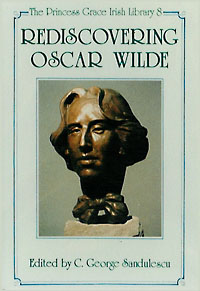
Rediscovering Oscar Wilde
The Princess Grace Irish Library 8
In the same way that students of Shakespeare discuss their `Supreme Quartet' of plays, so Irish Studies has its own quartet of writers – Yeats, Joyce, Beckett and Wilde – whose fame is outstanding and world-wide. Over the past years, conferences on all four members of this Irish quartet have been organised by the Princess Grace Irish Library of Monaco, the most recent, on Wilde, in 1993. The inclusion of Wilde in the quartet may surprise some, but it is an incontrovertible fact that scholars are coming to appreciate Wilde’s intrinsic importance as a writer, and as a major influence on 20th century literature.
Over the past years, conferences on all four members of this Irish quartet have been organised by the Princess Grace Irish Library of Monaco (the proceedings of each being published in this series), the most recent, on Wilde, in 1993. This collection of papers given then covers every aspect of Wilde's oeuvre, not only considering his plays, poetry and novels, but his family, his influence on writers both in English (such as Joyce and Stoppard) and in other languages (including, Martí, Darío, Borges and Lispector).
Quite how influential and far-reaching he has become can be seen by the names of the universities at which the contributors teach: Antonio Ballesteros González and Mariano Baselga (Universidad Autónoma, Madrid), Pia Brinzeu (Timisoara, Romania), Edward Burns (Liverpool), Richard Allen Cave (London), Davis Coakley (TCD), Jean M. Ellis D’Allessandro (Florence), Masolino D’Amico (Rome), Lawrence Danson (Princeton), Denis Donoghue (New York), Joseph Donohue (Massachusetts), Irène Eynat-Confino (Tel-Aviv), Michael Patrick Gillespie (Marquette, WI), Robert Gordon (London), Warwick Gould (London), Merlin Holland (Wilde’s grandson), Joel H. Kaplan (British Columbia), Patricia Kellogg-Dennis (Rider College, NJ), Melissa Knox (St Peter’s College, NJ), Jacques de Langlade (Paris), Donald Lawler (East Carolina, NC), Jerusha McCormack (UCD), Bart J. Moore-Gilbert (London), Isobel Murray (Aberdeen), Sylvia Oslermann (Jena), Norman Page (Nottingham), Keny Powell (Miami, Ohio); María Pilar Pulido (Lyon), Peter Ruby (Cambridge), Gerd Rohmann (Kassel), Roy Rosenstein (American University of Paris), Neil Sammells (Bath College), Ronald Schuchard (Emory), Theoharis Constantine Theoharis (MIT), Deirdre Toomey, Emmanuel Vemadakis (Angers), and Marie- Noelle Zeender (Nice).

Assessing the 1984 ‘Ulysses’
Alongside Eliot's Waste Land and Ezra Pound's Cantos, Ulysses is unquestionably the most important literary text of this century. That is why it is both natural and necessary to pay more than the usual attention to the significant detail embedded in that monumental work.
Joyce demanded that Ulysses be published on his fortieth birthday, 2 February 1922. He forced the non-English-speaking printers in Dijon to work against next to impossible deadlines, and from almost unreadable manuscripts and proofs, so clotted were they with revisions. For this and other reasons, Joyce himself was acutely aware of the unusually large number of 'errors' in the body of the book, and said as much in his letters to friends. There 'errors' irritated him so much that he even issued a number of errata lists during his lifetime, but to no avail. All editions of Ulysses teemed with misprints and other 'errors': this is about the only statement on which there is genuine critical consensus.
In the late 1970s a comprehensive research project was mounted in Munich in systematically to deal with these 'errors' with the aid of a sophisticated computer program. The outcome was the 'error-free' edition of Ulysses published on Bloomsday 1984.
The sole purpose of the conference held in Monaco in 1985, bringing together some of the most outstanding experts of the Joycean text, was to scrutinise collectively the validity of the changes made by the Munich team.
Anthony Burgess points out in his Preface that in Ulysses as in Finnegans Wake, 'it is virtually impossible to divide substance from form... the characters are so embedded in their mode of presentation that it would be dangerous to release them from their verbal ambience'. It is precisely that point that makes this collection of papers an indispensable companion to the New Text of Ulysses as it has emerged from its 1984 facelift.
The outstanding Joyce scholars contributing to this work include Richard Ellmann, Clive Hart, Fritz Senn, David Hayman, and Richard Kain.

Lady Gregory, Fifty Years After
It is now over fifty years since the death of Augusta Gregory, who as a playwright, folklorist, essayist, poet, translator, editor, theatre administrator and nationalist, contributed so much and so uniquely to the realisation of modern Ireland. Yet soon after her death she seemed to be virtually forgotten, and the words on her gravestone – ‘she shall be remembered for ever’ – had a very hollow ring about them.
It has only been in the last twenty-five years that Lady Gregory’s reputation has turned round, beginning with Elizabeth Coxhead’s biography, and the subsequent appearance of the Coole Edition of her works. The publication of Mary Lou Kohfeldt's biography in 1985 and now the appearance of this volume – the first collection of essays to be devoted to her – must surely create a greater awareness of her importance as a cornerstone of the Irish Literary Revival.
Her books and plays, together with her work for the Abbey as manager, playwright, play-reader and fund-raiser, have had an influence on the literary life of Ireland in the first half of this century that has been greatly underestimated.
This collection opens with fragments of memory about Lady Gregory, and then brings together leading critics to write about various aspects of her life, her work, and her friendships with Yeats, W. S. Blunt, Sean O’Casey, John Quinn, and Douglas Hyde. There is also a checklist of her contributions to periodicals (over 180 items so far discovered), and an assessment of the work of her son, Robert Gregory.
Fragments of memory come from George Moore, The Sunday Herald (Boston), Signe Toksvig, Sean O’Casey, The Rt. Rev. Arnold Harvey, Anne Gregory, W. B. Yeats, Anne Yeats, Maire nic Shiubhlaigh, W. G. Fay, Brinsley MacNamara and Gabriel Fallon.
The contributors are Andrew E. Malone, Mary FitzGerald, Mary Lou Kohfeldt Stevenson, Brian Jenkins, James Pethica, Elizabeth Longford, Daniel J. Murphy, Gareth W. Dunleavy, Maureen Murphy, John Kelly, Richard Allen Cave, Ronald Ayling, Robert Welch, Bernard Shaw, Dan H. Laurence, Lorna D. Young, Ann Saddlemyer, Colin Smythe.
INTRODUCTION. Ann Saddlemyer and Colin Smythe
Acknowledgements
CHRONOLOGY. Colin Smythe
FRAGMENTS OF MEMORY
Pen Portraits: George Moore Sunday Herald (Boston) Signe Toksvig Sean O'Casey
The Chatelaine of Coole: The Rt. Rev. Arnold Harvey, Anne Gregory, W. B. Yeats, Anne Yeats, Sean O'Casey, W. B. Yeats
At the Abbey Theatre: Maire nic Shiubhlaigh W. G. Fay Brinsley MacNamara Gabriel Fallon
LADY GREGORY, 1852–1932. Andrew E. Malone
'PERFECTION OF THE LIFE': LADY GREGORY'S AUTOBIOGRAPHICAL WRITINGS. Mary FitzGerald
THE CLOUD OF WITNESSES. Mary Lou Kohfeldt Stevenson
THE MARRIAGE. Brian Jenkins
LADY GREGORY AND WILFRID SCAWEN BLUNT. Elizabeth Longford
'A WOMAN'S SONNETS'. Lady Gregory, with a Commentary by James Pethica
'DEAR JOHN QUINN''. Daniel J. Murphy
THE PATTERN OF THREE THREADS: THE HYDE-GREGORY FRIENDSHIP. Gareth W. Dunleavy
LADY GREGORY AND THE GAELIC LEAGUE. Maureen Murphy
LADY GREGORY AND SEAN O'CASEY: AN UNLIKELY FRIENDSHIP REVISITED. Ronald Ayling
'FRIENDSHIP IS ALL THE HOUSE I HAVE': LADY GREGORY AND W. B. YEATS. John Kelly
A LANGUAGE FOR HEALING. Robert Welch
NOTE ON LADY GREGORY'S PLAYS. Bernard Shaw, edited by Dan H. Laurence
FOUR FRENCH COMEDIES: LADY GREGORY'S TRANSLATIONS OF MOLIÈRE. Mary FitzGerald
IN RETROSPECT: LADY GREGORY'S PLAYS FIFTY YEARS LATER. Lorna D. Young
THE GLORY OF THE WORLD AND THE PEASANT MIRROR. Ann Saddlemyer
LADY GREGORY'S CONTRIBUTIONS TO PERIODICALS: A CHECKLIST. Colin Smythe
APPENDIX: ROBERT GREGORY: ARTIST AND STAGE DESIGNER. Richard Allen Cave
Notes
Notes on Contributors
Index
More info →

Theatre Business: The Correspondence of the First Abbey Theatre Directors, Yeats, Lady Gregory & Synge
Although the Abbey Theatre directly evolved from the Irish Literary Theatre, its foundation in 1904 was as much a landmark in theatre history as it was in the evolution of the Irish Literary Revival. It proved to be an inspiration for the founding of other national theatres, as well as the little theatre movement in America and throughout the world.
The Literary Revival had many notable figures, but three stand out. These were the first directors of the Abbey: W. B. Yeats, poet, dramatist and later a Nobel Prize-winner; J.M. Synge, the greatest dramatist the Abbey produced; Lady Gregory, folklorist, a developing dramatist, and, as Sean O’Casey called her, the Abbey’s fairy godmother. To these, of equal importance to the Abbey, must be added Miss Annie Horniman of the tea family, whose money, advice and active support was equally essential during the early years.
In this volume Dr. Saddlemyer has created, by selecting from the correspondence of the first directors and drawing on material by Miss Horniman and others, a fascinating book that shows the foundation and evolution of the Abbey through the first five years of its existence, as seen from the inside by the protagonists. It describes the internal management problems, including the controversies that led to the first departure of players over nationalist principles, and the troubles which eventually brought about the resignation of Frank and Willie Fay, as well as the daily difficulties of programming, casting, production and finance, and the excitement of a pioneering theatrical enterprise.
More info →

The Descent of the Gods, being the Mystical Writings
Edited and annotated by Raghavan and Nandini Iyer
This volume contains A.E.'s known mystical writings, including his four major works, The Avatars (1933), The Candle of Vision (1918), The Interpreters (1922), and Song and its Fountains (1932), together with his letters and other prose contributions to Dana, Ethical Echo, The Internationalist, The Irish Theosophist, Lucifer, and Ourselves, W.Y.Evans Wentz's interview with A.E. in The Fairy-Faith in Celtic Countries, A.E.'s first independent publication, To the Fellows of the Theosophical Society, his introduction to City Without Walls, and many other spiritual books, reviews and his hitherto unpublished story ‘The Return’.
Although Russell, known as A.E., was a poet, painter, newspaper editor, and a political writer, working for three decades in the Irish cooperative movement, it is probably as a mystic that he attracts contemporary attention. His writings on mystical and mythological topics, reflecting his study of Hindu and Theosophical teachings as well as his own visionary experience, offer a unique and inspiring exploration of unseen worlds.
Interpretation of the context and significance of A.E.’s thinking is facilitated for the reader of this collection by the extensive introduction and copious notes offered by Professors Raghavan Iyer and Nandini Iyer.
.
More info →
Denis Johnston, A Retrospective
Published to mark Johnston's eightieth birthday, when he was the doyen of Ireland's living playwrights, this volume brings together memories from friends and critical essays on his work and achievement by leading scholars – John Boyd, Curtis Canfield, Richard Allen Cave, Mark Culme-Seymour, Cyril Cusack, Hilton Edwards, Maurice Elliott, Harold Ferrar, Robert Hogan, Thomas Kilroy, Roger McHugh, Micheál mac Liammóir, D.E.S.Maxwell, Vivian Mercier, Christopher Murray, B.L.Reid, Joseph Ronsley and Christine St Peter – together with a checklist of Denis Johnston's writings compiled by the editor of this volume.
Included as an appendix are some recent revisions by Denis Johnston to his A Bride for the Unicorn.
CONTENTS<br
Introduction <br
List of Illustrations <br
AN APPRECIATION. Hilton Edwards<br
THE OLD LADY SAYS `NO!' Micheál MacLiammóir<br
THE OLD LADY: IN PRINCIPIO. Christine St Peter<br
WAITING FOR EMMET. D.E.S.Maxwell<br
A NOTE ON THE NATURE OF EXPRESSIONISM AND DENIS JOHNSTON'S PLAYS. Curtis Canfield<br
THE MOON IN THE YELLOW RIVER: DENIS JOHNSTON'S SHAVIANISM. Thomas Kilroy<br
DENIS JOHNSTON'S HORSE LAUGH. Robert Hogan<br
JOHNSTON, TOLLER AND EXPRESSIONISM. Richard Allen Cave<br
THE GOLDEN CUCKOO: `A VERY REMARKABLE BIRD'. Christopher Murray<br
'HE IS ALWAYS JUST ROUND THE NEXT CORNER.' DENIS JOHNSTON'S IN SEARCH OF SWIFT . Maurice Elliott<br
'A HUMANE AND WELL-INTENTIONED PIECE OF GALLANTRY': DENIS JOHNSTON'S THE SCYTHE AND THE SUNSET Joseph Ronsley<br
THE ENDLESS SEARCH. John Boyd<br
THE PLAYS OF DENIS JOHNSTON. Roger McHugh<br
DEAR DENIS! Cyril Cusack<br
DENIS JOHNSTON'S SPIRITUAL QUEST. Harold Ferrar<br
JOHNSTON IN ACADEME. B.L. Reid<br
WITH DENIS JOHNSTON IN THE WESTERN DESERT. Mark Culme-Seymour<br
PERFECTION OF THE LIFE OR OF THE WORK. Vivian Mercier<br
CHECKLIST-LIST OF DENIS JOHNSTON'S WRITINGS. Joseph Ronsley<br
APPENDIX: REVISIONS TO A BRIDE FOR THE UNICORN, ETC. Denis Johnston<br
Notes on Contributors<br
Index

Corrib Country: A Rambler’s Guide and Map
ISBN: 978-1-873821-08-4
Format: 17pp. 58.0 cm x 78.5 cm folded to 19.5 cm x 16.0 cm 1998, 22 colour & 27 b&w illustrations.
Loch Corrib is the second largest lake in Ireland. Its shores and the surrounding area, north of Galway City, are less well known than neighbouring Connemara or the Burren. Its beautiful scenery and unspoilt environment offer many rewards to the visiting walker or fisherman.
More info →
Selected Plays of Lennox Robinson
Chosen and Introduced by Christopher Murray
The first volume of the Irish Drama Selections series (ISSN 0260-7962), General Editors: Joseph Ronsley and Ann Saddlemyer.
ISBN: 0-86140-087-9 / 978-0-86140-087-4 £25.00
Paperback ISBN: 0-86140-088-7 / 978-0-86140-088-1 £9.95
Contains: Patriots, The Whiteheaded Boy, Crabbed Youth and Age, The Big House, Drama at Inish, Church Street, bibliographical checklist.
Lennox Robinson was one of the leading playwrights of Dublin's Abbey Theatre as well as being its general manager and a director for many years. As with many other playwrights of the twentieth century, his work has been unjustly neglected, this volume, published in 1982, being the first of his plays to have appeared for over a quarter of a century. It is fitting, therefore, that this selection should be the first of a new series, Irish Drama Selections, which has sought to remedy the shortage of texts of the work of Ireland's dramatists, which with the exception of perhaps ten authors, are virtually unobtainable except in rare editions, long out of print.
Christopher Murray is Emeritus Professor of Drama and Theatre History, School of English, Drama and Film, University College Dublin. He is former editor of Irish University Review and former chair of the International Association for the Study of Irish Literatures (IASIL). Among his publications are Twentieth Century Irish Drama: Mirror up to Nation and Sean O'Casey, Writer at Work: A Biography. He also chose and introduced the fifteenth volume in the Irish Drama Selections series, Selected Plays of George Shiels.
More info →
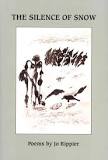
The Silence of Snow
52pp. 20.4 cm. 2013
In a sequence of haunting poems the author has put down the random thoughts that reflected his sense of isolation and formed a barrier to keep him from thinking about the suffering of his dying partner, until he had to face the agony of the inevitable departure and reconcile himself to that parting.
More info →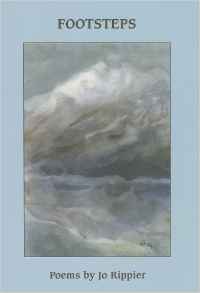
Footsteps
20.4cm
In this latest short volume of poems, Jo Rippier shows how his love of nature has increased, developed and deepened through his recent volumes of poetry as he envies the arctic fox and admires precariously preserved idyllic landscapes. In 'Temporal', he fuses mortality and summer into an image of peacefully combined opposites. His description of the artistically observant church visitor's reaction, in 'Regarding a Church', creeping away 'uncomforted' and 'uncomfortable at registering expectations somehow unfulfilled' will remain a compelling image for the reader as it formulates that fleeting experience many people have without being able to say what it was that left them faintly uneasy.
A memorable collection, and as with Rippier's earlier volumes, one of Gerhard Elsner's superbly evocative watercolours decorates the dustjacket.
More info →
Goodnight, Morning
Jo Rippier was born in Plymouth in 1935, and educated at King’s School Worcester and Emmanuel College Cambridge. He gained his Ph.D. in English Literature at the Johann Wolfgang Goethe Universitatät, where he was a lecturer in the English Department until retiring in 1998. His previous publications include The Short Stories of Sean O’Faolain: A Study in Descriptive Techniques,and Some Postwar English Novelists, a volume of short stories, Goodnight, Morning, and collections of poetry, Seasons and Remembrance (1981), Beginnings, Endings (1991), Past Present (1996), Against the Stream (1999, with aquarelles by Gerhard Elsner), Late Motley (2001), Something Old, Something New (2007), Echoes and Reflections (2009), Footsteps (2011), The Silence of Snow (2013), Darkness and Light (2014), Shadows (2015) and Sights and Sounds (2017).
More info →
Moments in Time
ISBN 978-0-86140-454-4
These short stories are in general an attempt to recapture and encapsulate aspects of a distant past that will soon have faded for ever. Tiny scenes, events and memories are brought back in the form of a reality that has, through the workings of time, become fictionalised. Who now knows what the reality actually was?
Jo Rippier was born in Plymouth in 1935, and educated at King’s School Worcester and Emmanuel College Cambridge. He gained his Ph.D. in English Literature at the Johann Wolfgang Goethe Universitatät, where he was a lecturer in the English Department until retiring in 1998. His previous publications include The Short Stories of Sean O’Faolain: A Study in Descriptive Techniques (1976), Some Post-war English Novelists, a volume of short stories, Goodnight, Morning, and collections of poetry, Seasons and Remembrance (1981), Beginnings, Endings (1991), Past Present (1996), Against the Stream (1999, with aquarelles by Gerhard Elsner), Late Motley (2001), Something Old, Something New (2007), Echoes and Reflections (2009), Footsteps (2011), The Silence of Snow (2013), Darkness and Light (2014), and Shadows (2015).
More info →
Something Old, Something New
Jo Rippier was born in Plymouth in 1935, and educated at King’s School Worcester and Emmanuel College Cambridge. He gained his Ph.D. in English Literature at the Johann Wolfgang Goethe Universitatät, where he was a lecturer in the English Department until retiring in 1998. His previous publications include The Short Stories of Sean O’Faolain: A Study in Descriptive Techniques,and Some Postwar English Novelists, a volume of short stories, Goodnight, Morning, and collections of poetry, Seasons & Remembrance, Beginnings, Endings, Past Present and Against the Stream.
More info →
Late Motley
Jo Rippier was born in Plymouth in 1935, and educated at King’s School Worcester and Emmanuel College Cambridge. He gained his Ph.D. in English Literature at the Johann Wolfgang Goethe Universitatät, where he was a lecturer in the English Department until retiring in 1998. His previous publications include The Short Stories of Sean O’Faolain: A Study in Descriptive Techniques,and Some Postwar English Novelists, a volume of short stories, Goodnight, Morning, and collections of poetry, Seasons & Remembrance, Beginnings, Endings, Past Present and Against the Stream.
Gerhard Elsner, whose illustration appears on the front cover, was born in Senftenberg, Germany, in 1930. He was educated at the Universities of Freiburg and Karlsruhe. He has a major reputation in Germany, with pictures in art museums and public buildings in Freiburg, Tübingen, Frankfurt, Konstanz and the Deutscher Bundestag in Berlin.
More info →
Echoes and Reflections
42pp. 20.4cm. 2009
This latest collection of poems by Jo Rippier reflect his love of the impact of the countryside and its scenery, of water, and of fishing, as well as childhood and school memories, and the memorials of war.
Jo Rippier was born in Plymouth in 1935, and educated at King’s School Worcester and Emmanuel College Cambridge. He gained his Ph.D. in English Literature at the Johann Wolfgang Goethe Universitatät, where he was a lecturer in the English Department until retiring in 1998. His previous publications include The Short Stories of Sean O’Faolain: A Study in Descriptive Techniques,and Some Postwar English Novelists, a volume of short stories, Goodnight, Morning, and collections of poetry, Seasons & Remembrance, Beginnings, Endings, Past Present, Against the Stream and Late Motley.
Gerhard Elsner, who illustration appears on the front cover, was born in Senftenberg, Germany, in 1930. He was educated at the Universities of Freiburg and Karlsruhe. He has a major reputation in Germany, with pictures in art museums and public buildings in Freiburg, Tübingen, Frankfurt, Konstanz and the Deutscher Bundestag in Berlin.
More info →